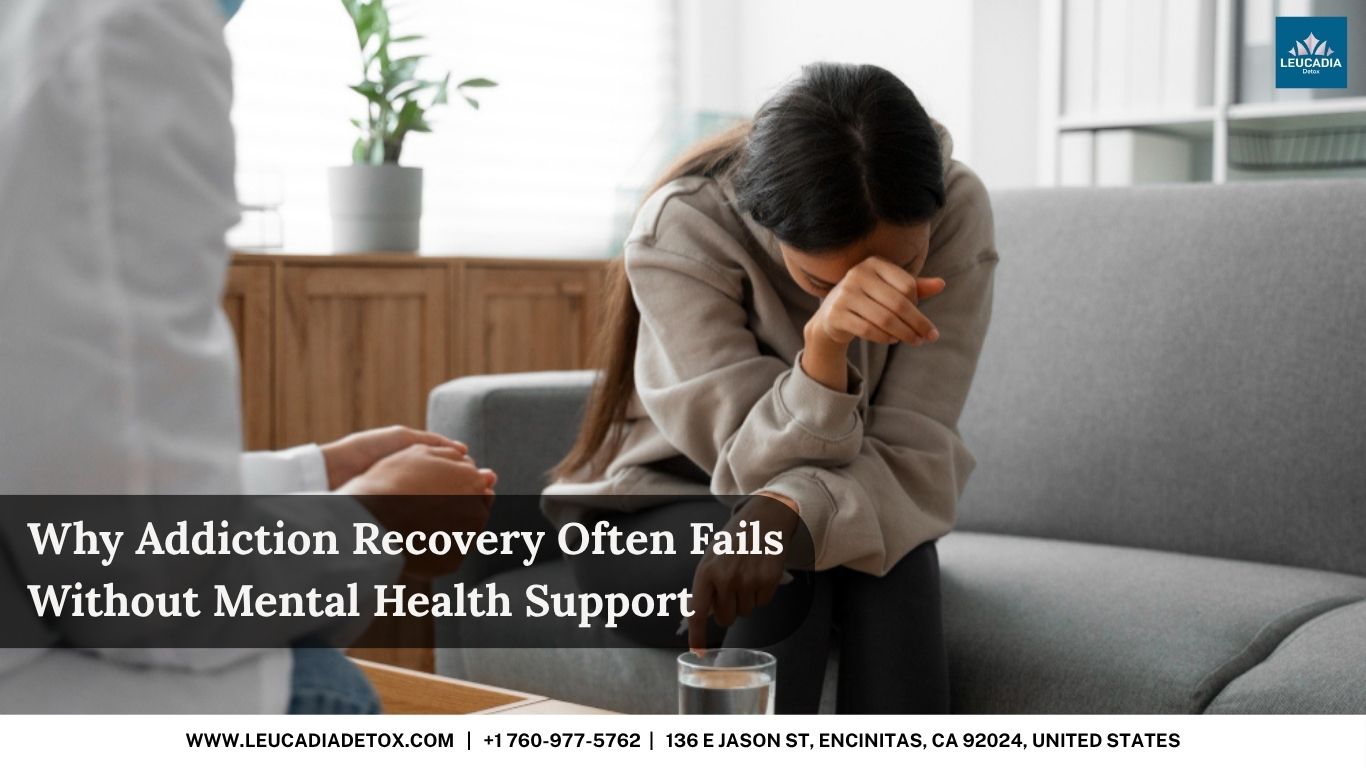
Why Addiction Recovery Often Fails Without Mental Health Support
Objective
This blog explains why addiction recovery often breaks down when mental health is ignored. It shows how anxiety, depression, trauma, and other emotional struggles can fuel substance use, increase relapse risk, and make healing harder. It also explains how mental health and addiction recovery work better together, and why dual diagnosis treatment is often a key part of lasting recovery.
Key Takeaways
- Addiction and mental health problems often affect each other.
- Recovery may fail when treatment only focuses on the substance.
- Anxiety, depression, trauma, and stress can trigger relapse.
- Dual diagnosis treatment helps address both problems simultaneously.
- Therapies like CBT, EMDR, and counseling can make recovery stronger.
- Real healing often starts when the person feels seen, safe, and supported.
1. Why Addiction And Mental Health Are So Closely Linked

A lot of people do not start using drugs or alcohol to have fun. Many start because they are trying to escape something painful. That pain may be anxiety, depression, trauma, grief, panic, shame, or long-term stress. For a short time, substances may seem to help. They may numb thoughts, quiet fear, or make sleep feel easier. But that relief does not last.
Over time, the person is left with two problems instead of one. The mental health struggle is still there, and now substance use has become another burden. This is why mental health and addiction recovery are so closely tied. When one problem gets worse, the other often does too.
A person with untreated depression may drink to feel less empty. A person with trauma may misuse pills to stop racing thoughts. A person with anxiety may use alcohol or drugs to feel calm in social situations or at night. These patterns are common, and they are also one reason recovery needs more than detox alone.
At Leucadia Detox, this connection matters because treatment works best when it considers the whole person, not just the substance.
2. What Dual Diagnosis Treatment Really Means
Dual diagnosis treatment means treating both addiction and mental health problems at the same time. It is used when a person has a substance use disorder along with a mental health condition such as depression, anxiety, PTSD, bipolar disorder, or another emotional health concern.
This matters because many people do not fit into one simple box. They are not dealing with only addiction. They are also carrying fear, sadness, panic, trauma, or emotional exhaustion. If treatment ignores those deeper struggles, the person may leave care sober but still overwhelmed.
That is where dual diagnosis treatment becomes important. It helps treatment teams ask better questions:
- What is the person using, and why?
- What emotions show up before relapse?
- Is sleep a problem?
- Is trauma still active?
- Is depression draining motivation?
- Is anxiety making everyday life feel unmanageable?
Without those answers, treatment can miss the real reasons the person keeps going back to the substance.
3. Why Recovery Often Fails Without Mental Health Support
Recovery often fails when treatment removes the substance but does not help the person handle life without it. On the outside, things may look better for a little while. The person may stop using. They may complete detox. They may even feel hopeful at first. But once real stress returns, the old emotional pain can come back fast.
That is the danger of treating only one side of the problem.
If a person stops drinking but still feels deeply depressed, they may relapse to escape that sadness. If someone stops misusing pills but still has trauma flashbacks, panic, or insomnia, they may start using again just to calm down. If a person feels shame, loneliness, or constant inner pressure and does not know how to manage it, recovery can start to feel unbearable.
This is why mental health and addiction recovery need to be built together. Without mental health support, the substance may be gone, but the triggers are still alive.
Some of the biggest reasons recovery fails include:
- Untreated anxiety
- Ongoing depression
- Trauma that has not been processed
- Poor sleep
- Low self-worth
- No healthy coping skills
- Emotional isolation
- Returning to the same stressful environment
These are not small issues. They are often the exact reasons a person started using in the first place.
4. Common Relapse Triggers Tied To Mental Health
Relapse is not always about craving alone. Very often, it is tied to emotional pain that was never fully treated. A person may stay sober for days, weeks, or even months, then fall back when mental strain builds up.
Common mental health-related relapse triggers include:
- Panic attacks
- Sadness that does not lift
- Strong stress at work or home
- Trauma memories
- Loneliness
- Guilt or shame
- Trouble sleeping
- Feeling emotionally numb
- Fear of failure
- Conflict in relationships
When these feelings build up, the brain may start remembering substance use as a fast way to get relief. That is why relapse prevention should not be limited to avoiding places or people. It should also include learning to handle fear, sadness, stress, and emotional pain more safely.
This is one reason treatment needs depth. People do not just need to stop using. They need better ways to live.
5. How Integrated Therapies Support Lasting Recovery
Integrated care gives people more than rules and routines. It gives them tools. This is where therapy becomes one of the strongest parts of recovery.
CBT In Mental Health And Addiction Recovery
Cognitive Behavioral Therapy, or CBT, helps people notice the thoughts that push them toward harmful behavior. It teaches them how to challenge those thoughts and replace them with healthier responses.
For example, a person may think, “I cannot handle this stress without using.” CBT helps them slow that thought down and build a different response. Over time, this can reduce panic, improve self-control, and make relapse less likely.
EMDR In Dual Diagnosis Treatment
EMDR is often used for trauma. It helps people process painful memories more safely. For some people, substance use began as a way to cope with trauma symptoms. If the trauma is never addressed, the urge to use may stay very strong. EMDR can help lower that emotional pressure.
Counseling And Emotional Support
Counseling gives people space to talk honestly. That may sound simple, but it matters. Many people in recovery have spent years hiding pain, denying fear, or pretending they are fine. Counseling helps them face what is real.
Benefits of integrated therapies include:
- Better emotional awareness
- Healthier coping skills
- Less shame
- Lower relapse risk
- Better sleep habits
- More stable relationships
- Stronger self-understanding
At Leucadia Detox, that kind of whole-person care can help people feel that recovery is not just about staying away from a substance. It is about building a life that feels possible without it.
For some people, an emotional support animal can also provide companionship, comfort, and a sense of routine during recovery. An ESA letter may help individuals who qualify for an emotional support animal obtain documentation for their needs. The Supportive Pet offers ESA letter for those seeking this type of support, complementing-not replacing-professional treatment, therapy, and ongoing mental health care.

6. Why Mental Health And Addiction Recovery Must Work Together
The phrase mental health and addiction recovery matters describes what lasting healing really looks like. A person cannot always fully recover by treating one part while ignoring the other. When both are treated together, progress becomes more realistic.
This does not mean healing happens fast. It does not mean every day feels easy. But it does mean the person has a better chance of understanding their patterns, managing their emotions, and staying connected to support.
Dual diagnosis treatment also helps reduce blame. Instead of asking, “Why can’t this person just stop?” it asks, “What pain is driving this, and how do we treat it safely?” That shift matters. It creates compassion, not judgment.
7. When It May Be Time To Seek Professional Help
A person may need professional support when any of these are happening:
- Repeated relapse after trying to quit
- Ongoing anxiety or depression during recovery
- Trauma symptoms that feel overwhelming
- Using substances to sleep, calm down, or escape
- Strong mood swings
- Isolation and hopelessness
- Feeling unable to cope without drugs or alcohol
- Recovery that never seems to last
These signs do not mean the person has failed. They often mean the treatment plan was incomplete. Real recovery needs honest, structured, and emotionally informed support.
Conclusion
Addiction recovery often fails when mental health is treated as a side issue instead of part of the core problem. If trauma, anxiety, depression, shame, or emotional pain are left untreated, relapse can become much more likely. That is why mental health and addiction recovery must work together, and why dual diagnosis treatment can make such a real difference. At Leucadia Detox, that whole-person approach can help people move beyond short-term sobriety and toward a recovery that feels stronger, safer, and more lasting.
Start Healing Beyond Addiction And Emotional Pain
If recovery feels unstable or overwhelming, you are not alone. Get support that treats both addiction and mental health so you can finally feel in control again.
FAQs
1. Why Is Mental Health So Important In Addiction Recovery?
Mental health is important because many people use substances to cope with emotional pain. If that pain is not treated, relapse becomes more likely.
2. What Is Dual Diagnosis Treatment?
Dual diagnosis treatment is care for both addiction and a mental health condition at the same time. It helps treat the full problem rather than just one part.
3. Can Anxiety And Depression Make Recovery Harder?
Yes. Anxiety and depression can increase cravings, reduce motivation, affect sleep, and make stress harder to handle during recovery.
4. How Does CBT Help In Mental Health And Addiction Recovery?
CBT helps people notice harmful thought patterns, manage stress better, and respond to triggers in healthier ways.
5. Is EMDR Helpful For People With Trauma And Addiction?
EMDR can help some people process trauma more safely. This may reduce the emotional pressure that often feeds substance use.
6. When Should Someone Look For Professional Treatment?
A person should seek help when relapse keeps happening, emotional pain feels too heavy, or substance use has become a main way to cope with life.