Ambien And Sleep: When A Prescription Becomes A Problem
Objective
This blog explains how Ambien can help with short-term sleep problems, and how that same medicine can become difficult to stop when the body starts depending on it. It also explains side effects, withdrawal risks, and when professional care may be needed. Leucadia Detox supports people who are struggling with prescription sleep medication use and need a safer way forward.
Key Takeaways
- Ambien is the brand name for zolpidem.
- Doctors prescribe it for short-term insomnia, mainly when someone has trouble falling asleep.
- Long-term use can make sleep feel harder without the pill.
- Tolerance can develop, which means the same dose may not feel as effective.
- Zolpidem side effects can affect memory, mood, alertness, and safety.
- Sleeping pill dependency can happen even when the medication was first taken as prescribed.
- Stopping suddenly may cause rebound insomnia, cravings, anxiety, and withdrawal symptoms.
- Medical detox, rehab, therapy, and relapse prevention can help people recover with support.
Why Ambien Can Seem Like The Answer At First
Anyone who has gone through real insomnia knows how heavy it feels. One bad night is frustrating. Several bad nights can make the whole body feel worn down. Work becomes harder. Patience gets shorter. Even simple conversations can feel like too much.
That is usually when a doctor may consider a short-term sleep medication.
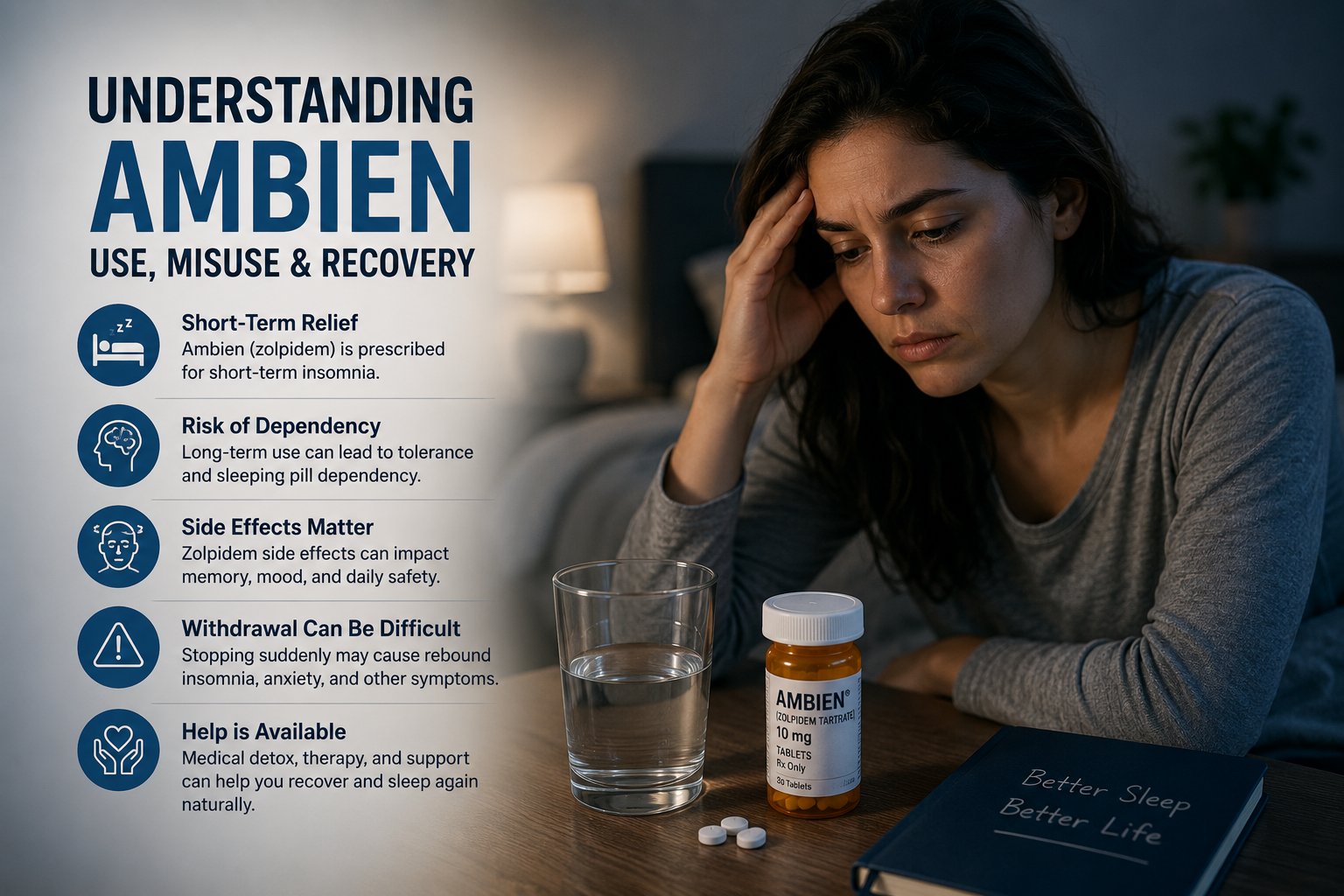
Ambien is a prescription sleep medication. Its active ingredient is zolpidem. It is used for short-term treatment of insomnia when a person has trouble falling asleep. The FDA label describes Ambien as a short-term treatment for insomnia linked to sleep initiation.
For some people, it helps quickly. They take the pill, fall asleep faster, and finally feel some relief. That relief can feel huge when sleep has been missing for days or weeks.
The problem begins when short-term help slowly turns into nightly reliance.
Many people return to Ambien after a few difficult nights, not because they do not want recovery, but because the fear of sleeplessness becomes too much. That is why treatment should not only focus on stopping the medication. It should also help the person rebuild trust in natural sleep.
When Sleep Starts To Depend On A Pill
Ambien use does not always become a problem overnight. It often happens in small steps.
At first, someone may take it during a stressful week. Then they keep it nearby “just in case.” After a while, bedtime feels unsafe without it. The person may not be chasing a high. They may be afraid of not sleeping.
The fear of another sleepless night can make the medication feel harder to give up.
Over time, the body can get used to the medication. The same amount may not feel as strong as it once did. This is known as tolerance. When tolerance builds, some people begin taking more than prescribed or taking it more often than planned.
That is where sleeping pill dependency can begin.
Dependency can look like this:
- Feeling anxious when the prescription is almost finished
- Believing sleep is impossible without Ambien
- Taking it longer than the doctor intended
- Using it during stress instead of only for sleep
- Mixing it with alcohol or other sedating substances
- Trying to stop, but going back to it
- Forgetting what happened after taking it
These signs should be taken seriously. A person may have started with a real prescription, but their body may now be relying on the medicine in a way that needs support.
Zolpidem Side Effects That Can Affect Daily Life
Many people think Ambien only works at night. But zolpidem side effects can carry into the next day.
Some people wake up feeling foggy. Others feel slow, dizzy, moody, or disconnected. These effects can interfere with driving, work, school, parenting, and basic decision-making. MedlinePlus lists drowsiness, tiredness, headache, dizziness, nausea, and memory issues among possible zolpidem side effects.
Common issues may include:
- Daytime drowsiness
- Poor coordination
- Dizziness
- Headache
- Memory gaps
- Mood changes
- Irritability
- Trouble focusing
- Feeling tired even after sleep
One serious concern is unusual sleep behavior. Some people may walk, eat, drive, make calls, or do other things while not fully awake. They may not remember it later. The FDA has issued a boxed warning for complex sleep behaviors linked to zolpidem and similar sleep medicines because serious injuries have happened.
That is not a small side effect. It is a reason to speak with a medical professional right away.
Why Ambien Misuse Can Be Easy To Miss
Prescription medication problems can be hard to recognize because a doctor prescribed the medicine. That can make people feel safe even when their use has changed.
Someone may tell themselves, “It is not a problem because it was prescribed.” But the real question is not only where the medication came from. The real question is how much control it now has over sleep, mood, and daily life.
A problem may be developing if someone hides their use, runs out early, feels panic without the pill, or keeps taking it despite memory problems or next-day drowsiness.
Family members may notice changes first. They may see the person becoming more withdrawn, forgetful, tired, or emotionally flat. These changes can be confusing until the medication pattern becomes clear.
Why Stopping Suddenly Can Make Things Worse
Once someone realizes Ambien has become a problem, they may want to stop immediately. That reaction is understandable. But stopping suddenly after regular use can be hard on the body.
Withdrawal can bring back sleep problems in a stronger way. This is called rebound insomnia. A person may also feel anxious, restless, irritable, shaky, or emotionally unsettled. NHS guidance warns that people who have taken zolpidem for more than a few weeks should speak with a doctor before stopping, because withdrawal symptoms and worse insomnia can happen.
Possible withdrawal symptoms may include:
- Rebound insomnia
- Anxiety
- Restlessness
- Irritability
- Sweating
- Shaking
- Nausea
- Mood swings
- Cravings
- Trouble concentrating
Medical support can make this stage safer and less overwhelming. The goal is to stop safely and begin sleeping again without depending on it.
When Professional Help May Be Needed
Professional help may be needed when Ambien use feels difficult to control. It may also be needed when withdrawal symptoms appear after skipping a dose or trying to cut back.
Support is especially important when Ambien is mixed with alcohol, opioids, anxiety medication, or other sedating substances. The risks can increase when the nervous system is affected by multiple substances.
At Leucadia Detox, treatment can begin with a clear look at the person’s sleep history, medication use, withdrawal symptoms, and overall health. That first step matters because no two people reach dependency in the same way.
Treatment Options For Ambien Misuse
Treatment should address both the medication use and the underlying sleep problem.If anxiety, trauma, stress, depression, or chronic insomnia is part of the problem, treatment should address that as well.
Medical Detox
Medical detox supports the body as it adjusts. It can help manage withdrawal symptoms and reduce risks during the early stage of stopping.
Rehab Support
Rehab adds structure after detox. It helps people understand patterns, triggers, and the emotional reasons they kept returning to the medication.
Therapy
Therapy can help with anxiety, stress, grief, trauma, and fear around sleep. It can also help rebuild healthier bedtime habits.
Sleep Routine Support
Sleep often has to be rebuilt slowly. A steady sleep schedule, calmer evenings, less screen time, and relaxation tools can all help.
Relapse Prevention
Relapse prevention prepares people for difficult nights. It gives them a plan before cravings, stress, or sleeplessness become overwhelming.
Final Thoughts
Ambien can be helpful when it is used carefully and for the right reason. But when sleep becomes impossible without it, the situation deserves attention. Sleeping pill dependency can grow quietly, especially when a person is only trying to rest.
Leucadia Detox helps people take that concern seriously and move toward safer recovery support.
“Reach out through an ambien detox center or a professional Ambien addiction treatment program if Ambien use feels hard to control. Safe recovery starts with medical guidance, honest support, and a plan built around your health.”
Struggling to Sleep Without Ambien?
Ambien dependency can quietly affect sleep, memory, mood, and daily life.
At Leucadia Detox, our medically supervised Ambien detox and addiction treatment programs
provide safe support for withdrawal symptoms, rebound insomnia, and long-term recovery.
You do not have to face prescription sleep medication dependence alone.
Frequently Asked Questions
What Is Ambien Used For?
Ambien is used for short-term insomnia, especially when someone has trouble falling asleep. It should only be taken under medical direction.
What Are Common Zolpidem Side Effects?
Common zolpidem side effects include drowsiness, dizziness, headache, nausea, memory problems, mood changes, poor coordination, and next-day tiredness.
What Is Sleeping Pill Dependency?
Sleeping pill dependency means a person has started to rely on medication to sleep or feel calm at night. They may feel anxious without it, take it longer than planned, or struggle to stop even when they want to.
Can Ambien Cause Unusual Sleep Behaviors?
Yes. Some people may walk, eat, drive, or do other activities while not fully awake. They may not remember these events later.
Can Stopping Ambien Suddenly Cause Withdrawal?
Yes. Stopping suddenly after regular use may cause rebound insomnia, anxiety, restlessness, mood changes, cravings, and other withdrawal symptoms.
When Should Someone Seek Help For Ambien Use?
Help may be needed if someone takes more than prescribed, cannot sleep without Ambien, runs out early, mixes it with other substances, or feels withdrawal symptoms when trying to stop.