Is Benzo Withdrawal Dangerous Without Medical Help?
Objective
To explain why stopping benzodiazepines without medical supervision is genuinely risky, what the body goes through during withdrawal, and what safe treatment looks like.
Key Takeaways
- Benzo withdrawal can trigger life-threatening seizures if stopped suddenly
- Dependency forms faster than most people expect, even with a prescription
- Benzo withdrawal symptoms range from anxiety and insomnia to hallucinations
- Withdrawal timelines span days to weeks, depending on individual usage history
- Medical detox is the safest way to manage withdrawal and prevent relapse
Why Benzo Withdrawal Is More Dangerous Than Most People Expect
Most people assume withdrawal means feeling sick for a few days. With benzodiazepines, withdrawal can become medically serious, especially when someone stops suddenly or reduces the dose too quickly.
Benzos include common medications like Xanax, Valium, Klonopin, and Ativan. Doctors prescribe them for anxiety, panic disorders, and sleep problems. They work quickly and feel effective. But the brain adapts to them faster than most people realize, and stopping without help puts the body under serious stress.
At Leucadia Detox, medically supervised benzo withdrawal is one of the most requested services, because quitting cold turkey at home carries real risks that go far beyond discomfort.
How Benzodiazepines Affect the Brain and Create Dependency
What Benzos Do to the Brain’s Chemistry
Benzodiazepines work by increasing the effects of GABA, a neurotransmitter that slows nerve activity. When GABA works well, the brain feels calm. Benzos amplify this effect quickly, which is why they reduce anxiety and panic almost immediately.
The brain adjusts over time. It produces less GABA on its own because it expects the drug to do that job. The natural calming system weakens the longer the benzodiazepine use continues.
Why Dependency Develops So Quickly
Physical dependency can develop in as little as two to four weeks of regular use. This is not about willpower or personal weakness. It is how the brain responds to a substance that directly alters its chemistry.
The nervous system can become overactive when benzodiazepines are stopped too quickly. Nerve activity spikes sharply, and that rebound is what makes benzo withdrawal can be medically serious and should be managed with professional guidance, especially after regular or long-term use.
Common Benzo Withdrawal Symptoms
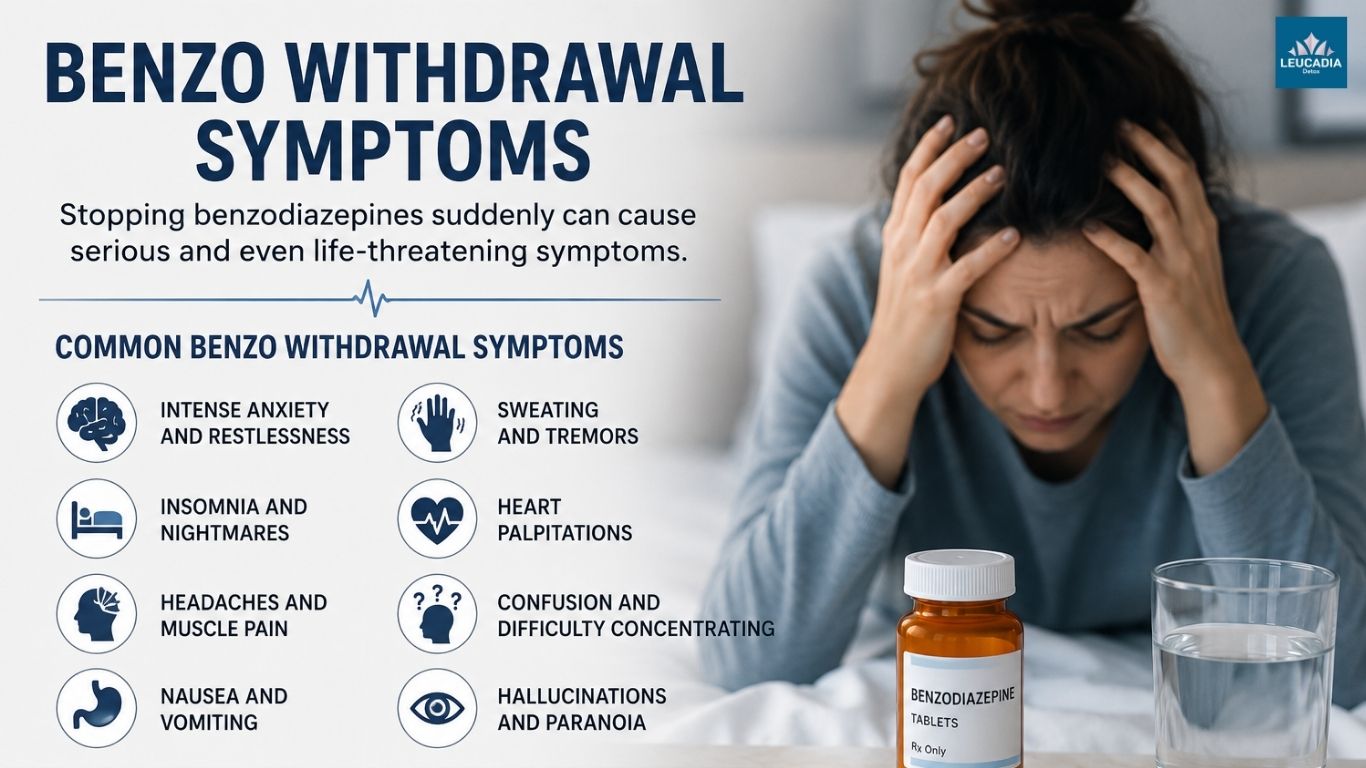
Benzo withdrawal symptoms vary depending on the drug, dose, and duration of use. They fall into two categories: early symptoms and severe complications.
Early and Moderate Symptoms:
- Intense anxiety and restlessness
- Sweating and tremors
- Muscle pain and stiffness
- Insomnia and nightmares
- Nausea, vomiting, and headaches
- Heart palpitations
- Difficulty concentrating
Severe Symptoms:
- Panic attacks
- Hallucinations, visual, auditory, or tactile
- Paranoia and confusion
- Psychosis
- Grand mal seizures
Seizures are the most dangerous risk. They can occur without warning, even in people who feel like they are managing the process fine. This is why attempting benzo withdrawal alone is genuinely unsafe.
The Xanax Withdrawal Timeline: What to Expect
The Xanax withdrawal timeline is one of the most commonly searched because Xanax is one of the most widely prescribed, and misused, benzos. It is a short-acting drug, which means withdrawal symptoms appear faster than with longer-acting options like Valium.
Stage 1: Hours 6–12 After the Last Dose
Anxiety starts returning. This is often mistaken for the original condition coming back rather than the withdrawal beginning. Restlessness, irritability, and physical tension set in quickly.
Stage 2: Days 1–4
For many people, symptoms can become more intense during the first few days after stopping short-acting benzodiazepines like Xanax. The exact timing depends on dose, duration of use, health history, and whether other substances are involved.
Symptoms are at their most intense, and seizure risk is highest. Insomnia, panic attacks, sweating, nausea, and confusion are all common. This stage can carry higher risk for some people, so medical guidance is strongly recommended.
Stage 3: Days 5–14
Acute symptoms begin to ease for most people. Sleep slowly improves. Physical symptoms reduce. However, anxiety and emotional instability often continue and can be severe.
Stage 4: Weeks 2 and Beyond
Some people experience post-acute withdrawal syndrome, prolonged anxiety, mood swings, and low motivation that can last weeks or months, depending on how long benzo use continued.
Xanax withdrawal is shorter than longer-acting benzos but more intense in the early days. Medical monitoring during this window is critical.
Why Quitting Benzos Without Medical Help Is Dangerous
The Risk of Seizures Is Real
Benzo withdrawal is widely recognized in medicine as potentially fatal. Seizures can cause brain injury, cardiac events, and death. This is not an exaggeration, it is a documented medical reality.
Anxiety and Panic Rebound Hard
The brain’s natural anxiety regulation has been suppressed for however long benzo use continued. When the drug is removed, anxiety does not return to baseline. It overshoots hard and fast. Panic attacks during withdrawal can be more intense than anything experienced before starting the medication.
Hallucinations and Psychosis Are Possible
Hallucinations and a temporary psychosis-like state are possible during severe withdrawal. People experiencing this are not safe alone. They may not recognize what is happening or be able to call for help.
Relapse Rates Are High Without Support
People who attempt to quit alone and hit peak withdrawal often go back to using, not from lack of motivation, but because the discomfort becomes unbearable. Medical supervision prevents this.
Why Medically Supervised Benzo Detox Is the Safer Choice
What Medical Detox Actually Involves
Medical detox does not mean going through withdrawal cold turkey in a hospital bed. It is a structured clinical process. The standard approach is a gradual taper, slowly reducing the dose over days or weeks so the brain can adjust without a sudden shock. Medications are used to manage symptoms and prevent complications.
This process is individualized. The taper schedule depends on which benzo was used, the dose, and how long the person has been taking it.
How Detox Reduces Seizure and Complication Risk
When withdrawal is medically managed, the risk of seizures drops significantly. Vital signs are monitored. Staff can intervene quickly if symptoms escalate. That level of safety is not possible at home.
Leucadia Detox provides medically supervised support for people who need help managing benzo withdrawal safely.
Therapy Starts During Detox, Not After
A good detox program does not just manage physical symptoms. It connects people to counseling and mental health support from the beginning. Anxiety, panic, and mood disruption during benzo withdrawal respond well to therapeutic intervention alongside medical care.
Treatment Options After Benzo Detox
Detox addresses physical dependency. It does not address the reasons behind benzo use or the patterns that drove it. That is what ongoing treatment is for.
Options following medically supervised detox typically include:
- Inpatient residential rehab for structured, immersive care
- Outpatient programs for people who need flexibility
- Individual therapy, particularly cognitive behavioral therapy for anxiety
- Group therapy and peer support programs
- Long-term medication management, where appropriate
- Relapse prevention planning
Recovery from benzo dependency is not a single event. It is a process, and having support throughout it significantly improves outcomes.
Final Thoughts: Benzo Withdrawal Needs Medical Attention
Stopping benzos without help is not just uncomfortable; it’s dangerous. It is medically risky in ways that can catch people off guard, even when they feel prepared.
Understanding withdrawal symptoms, understanding when peak risk arrives, all of these points are in the same direction. Medical supervision during withdrawal is not optional safety. It is the right approach.
Leucadia Detox works with people through every stage of this process, from the first hours of detox through recovery planning on the other side.
If you or someone you care about is dependent on benzos, do not attempt to stop alone. Reach out to a benzo detox program in California for medical support, withdrawal monitoring, and recovery planning.
Don’t Risk Benzo Withdrawal Alone
Benzodiazepine withdrawal can become dangerous without proper medical support.
At Leucadia Detox, our medically supervised detox programs help manage withdrawal symptoms,
reduce seizure risks, and provide compassionate care throughout the recovery process.
Frequently Asked Questions
Can Benzo Withdrawal Be Life-Threatening?
Yes, in some cases. Stopping benzodiazepines suddenly can lead to serious withdrawal reactions, including seizures. Anyone who has taken benzos regularly should speak with a medical professional before stopping.
What Are the Worst Benzo Withdrawal Symptoms?
The most severe benzo withdrawal symptoms include grand mal seizures, hallucinations, psychosis, and intense panic attacks. These symptoms are more likely in people with heavy use, long-term use, high doses, abrupt stopping, or a history of withdrawal complications.
How Long Does Xanax Withdrawal Last?
The Xanax withdrawal timeline typically begins within 6 to 12 hours of the last dose, peaks around days 1 to 4, and improves over the following two weeks. Some people experience lingering anxiety for weeks or months after, known as post-acute withdrawal syndrome.
Is It Safe to Taper Off Benzos at Home?
Tapering at home without supervision carries real risk. Without clinical monitoring, it is hard to manage the rate safely or respond if symptoms escalate. Medical supervision makes the process far safer.