The Sensations of a Heroin Overdose: Painful Reality or Not?
Introduction: Why People Ask This Question
People often talk about heroin overdose in a way that sounds distant or dramatic. But real life is different. Families, friends, and even people who use opioids often wonder the same thing: Is a heroin overdose painful?
Some believe an overdose is like falling asleep. Others believe it is full of pain and panic. The truth is more complex. Overdose can feel different from person to person. But it has one main danger. The body stops breathing normally.
If you have read educational resources like Leucadia Detox, you may already know that overdose is not just about addiction. It is about oxygen, time, and fast help.
Did You Know Facts
- Heroin overdose usually causes respiratory depression, which means breathing becomes slow and weak.
- Many overdose deaths happen because people are alone, and no one can respond in time.
- Naloxone (Narcan) can reverse an opioid overdose in minutes, but medical care is still needed after.
- Mixing heroin with alcohol or benzodiazepines greatly increases overdose risk.
What Happens in the Body During a Heroin Overdose
Heroin is an opioid. It binds to opioid receptors in the brain. These receptors control things like:
- pain relief
- mood
- sleep
- breathing
During an overdose, the drug’s effect becomes too strong. The brain stops sending proper signals to breathe. Breathing slows down or stops. Oxygen drops in the blood. This leads to:
- confusion
- unconsciousness
- brain injury
- death
This is why an overdose is so severe. It is not only about the drug but about oxygen loss.
Physical Sensations During a Heroin Overdose
Let’s address the central question clearly.
Physical sensations during a heroin overdose

People who survive an overdose often describe a strong “fade out” feeling. They may not remember everything. But some sensations happen before complete unconsciousness.
Common physical sensations during a heroin overdose
- Extreme sleepiness and heavy eyelids
- Weak body, like muscles, stop working
- Slow breathing or feeling like breathing is “too hard.”
- Dizziness
- Confusion and loss of control
- Nausea or vomiting
- Cold or clammy skin
- Slow heartbeat
- Blue lips or fingertips due to low oxygen
Is it painful?
Sometimes. Sometimes not.
Why it can feel painful
- Lack of oxygen can cause panic and distress
- Vomit can cause choking
- Some people feel tightness in the chest
- Some people feel like they cannot wake up
Why it may not feel painful
- Many people become unconscious quickly
- The drug can numb pain before awareness is lost
So the honest answer is: overdose may not be painful in the way people imagine. But it can still be terrifying.
Mental Effects and Emotional Experience Explained
Heroin overdose can affect the mind in strong ways.
Common mental effects and emotional experiences are explained.
- confusion
- feeling “far away” from reality
- intense drowsiness
- fear or panic before blacking out
- hearing voices or sounds like they are distant
- dream-like state
- memory loss after waking up
Some survivors describe it like this:
- “I was slipping away, and I could not stop it.”
- “I could hear people, but I could not move.”
- “I thought I was sleeping, but something felt wrong.”
Not everyone has fear. But many do, especially when breathing becomes difficult.
What Does a Heroin Overdose Look Like
This is important because most overdose deaths happen when people do not notice the signs.
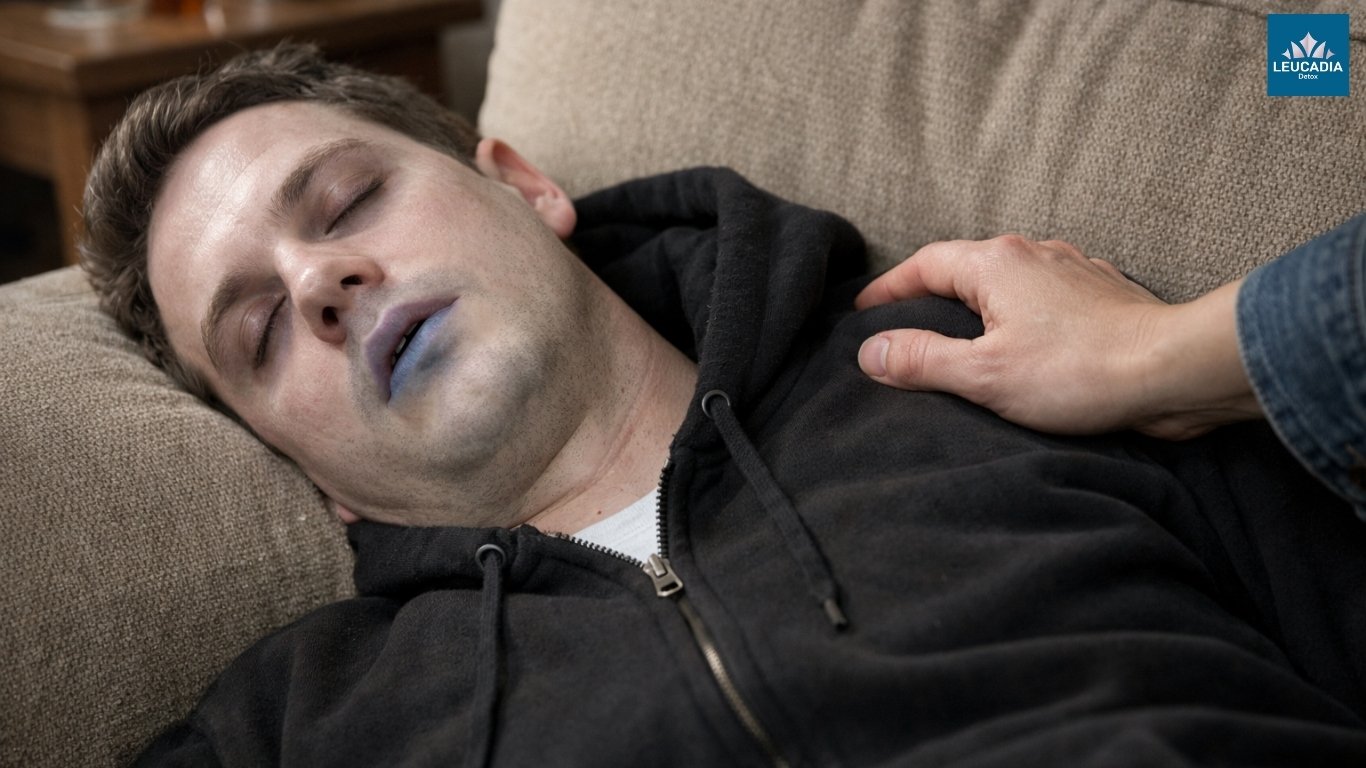
When people ask what a heroin overdose looks like, this is usually what it looks like:
- A person cannot wake up
- Breathing is very slow or stopped
- skin is pale, cold, or bluish
- Lips may turn blue or purple
- Choking or gurgling sounds happen
- The body becomes limp
This is not “deep sleep.” This is an emergency.
Common Warning Signs and Symptoms of Heroin Overdose Observed
Some signs happen before a full overdose. Recognizing them early can save a life.
Early warning signs
- nodding off repeatedly
- very small pupils (pinpoint pupils)
- slurred speech
- very slow movements
- falling asleep mid-sentence
Serious overdose signs
- not breathing or gasping
- choking sounds
- blue lips
- pale face
- no response to shouting or shaking
- weak pulse or no pulse
If you see these signs, treat it as an overdose.
Immediate Actions and Medical Help Needed
This section matters most.
Step-by-step emergency actions
- Call emergency services immediately
- Do this first. Time matters.
- Check breathing and responsiveness
- Try to wake them. Call their name. Rub knuckles on the breastbone.
- Give naloxone if available
- Follow the instructions on the device.
- Repeat dose if no response in 2–3 minutes.
- Start rescue breathing if needed
- If they are not breathing, give rescue breaths.
- Put them in the recovery position
- This prevents choking if they vomit.
- Stay with the person until help arrives.
Even if they wake up, an overdose can return. Heroin can outlast naloxone.
This is why emergency medical care is always needed.
Clear Your Questions About Overdose Reality
If confusion, fear, or unanswered questions are weighing on you, this is the right place to understand overdose risks, sensations, and life-saving awareness clearly.
Preventive Tips and Overdose Awareness Guide
Overdose prevention is about information and planning. Many overdoses happen after a break from use because tolerance drops.
Preventive tips and overdose awareness guide
- Do not use alone (many overdoses happen with no one to respond)
- Carry naloxone
- Avoid mixing heroin with alcohol or benzos
- Know tolerance changes after detox, jail, or rehab
- Test substances when possible (fentanyl contamination is common)
- Learn overdose response steps before an emergency happens
Support also matters. People are more likely to stay safe when they have help.
Programs and education like Leucadia Detox often focus on this early awareness because it saves lives.
Conclusion: Painful Reality or Not?
So, is a heroin overdose painful?
It can be especially if the person feels air hunger, panic, or choking. But for many people, it becomes unconscious quickly. That does not mean it is safe or peaceful. It means the brain is shutting down from a lack of oxygen.
The most important thing is this: overdose is not a moment. It is a medical emergency. When the warning signs show up, quick action is what decides life or death.
If you are learning about overdose awareness through resources like Leucadia Detox, keep this in mind. Knowing what to look for and how to respond is powerful. It saves real lives.
FAQs
1) What are the physical sensations during a heroin overdose?
The physical sensations during a heroin overdose often include extreme sleepiness, slow breathing, dizziness, weakness, nausea, and a fading-out feeling as oxygen drops.
2) What mental effects and emotional experiences are explained during a heroin overdose?
The mental effects and emotional experience explained often include confusion, fear, panic, dream-like thinking, and memory loss once the person wakes up.
3) What are the common warning signs and symptoms of a heroin overdose observed by others?
The common warning signs and symptoms of a heroin overdose observed include pinpoint pupils, very slow or stopped breathing, blue lips, choking sounds, pale skin, and being unable to wake up.
4) What immediate actions and medical help are needed for a heroin overdose?
The immediate actions and medical help needed include calling emergency services, administering naloxone, checking breathing, performing rescue breathing if needed, placing the person in the recovery position, and staying with the person until help arrives.
5) What preventive tips and overdose awareness guide steps reduce heroin overdose risk?
A preventive tips and overdose awareness guide includes carrying naloxone, avoiding mixing drugs, recognizing tolerance changes, not using alone, and learning overdose response steps early.
6) What does a heroin overdose look like?
When people ask what a heroin overdose looks like, it often means the person is not waking up, has slow or stopped breathing, bluish lips, pale skin, and choking or gurgling sounds.
7) What is heroin overdose ICD 10 used for?
Heroin overdose ICD 10 is used for medical coding and documentation in healthcare systems. It helps hospitals record and track opioid overdose cases for treatment and reporting.