
Why Certain Drugs Become Addictive So Quickly Compared to Others
Addiction is often like a sudden onset. On one day, it is manageable. The next day, it seems uncontrollable. A lot of people ask the same question. Why are certain substances addictive in such a short time compared to other substances? It all depends on the way the brain functions, how different substances interact with the brain, and what personal factors affect the response.
At Leucadia Detox, many people arrive feeling overwhelmed and confused. Some struggle. Some are trying to figure out the reasons behind what’s happening to the person they cherish. Understanding the process of addiction is a vital first step. This blog will explain the science of addiction in clear.
Understanding How Addiction Begins in the Brain
Addiction is not a result of insufficient willpower or poor choices. It starts with the brain.
How the Brain’s Reward System Works
Your brain has an inbuilt reward system. Its role is to keep you healthy and energized.
It is rewarded for actions such as:
- Eating
- Sleeping
- Social bonding
- Achievement of objectives
If you perform these actions, your brain produces dopamine. Dopamine generates joy and motivates. It signals your brain that it is worthy of repeating.
How Drugs Disrupt the Brain’s Reward System
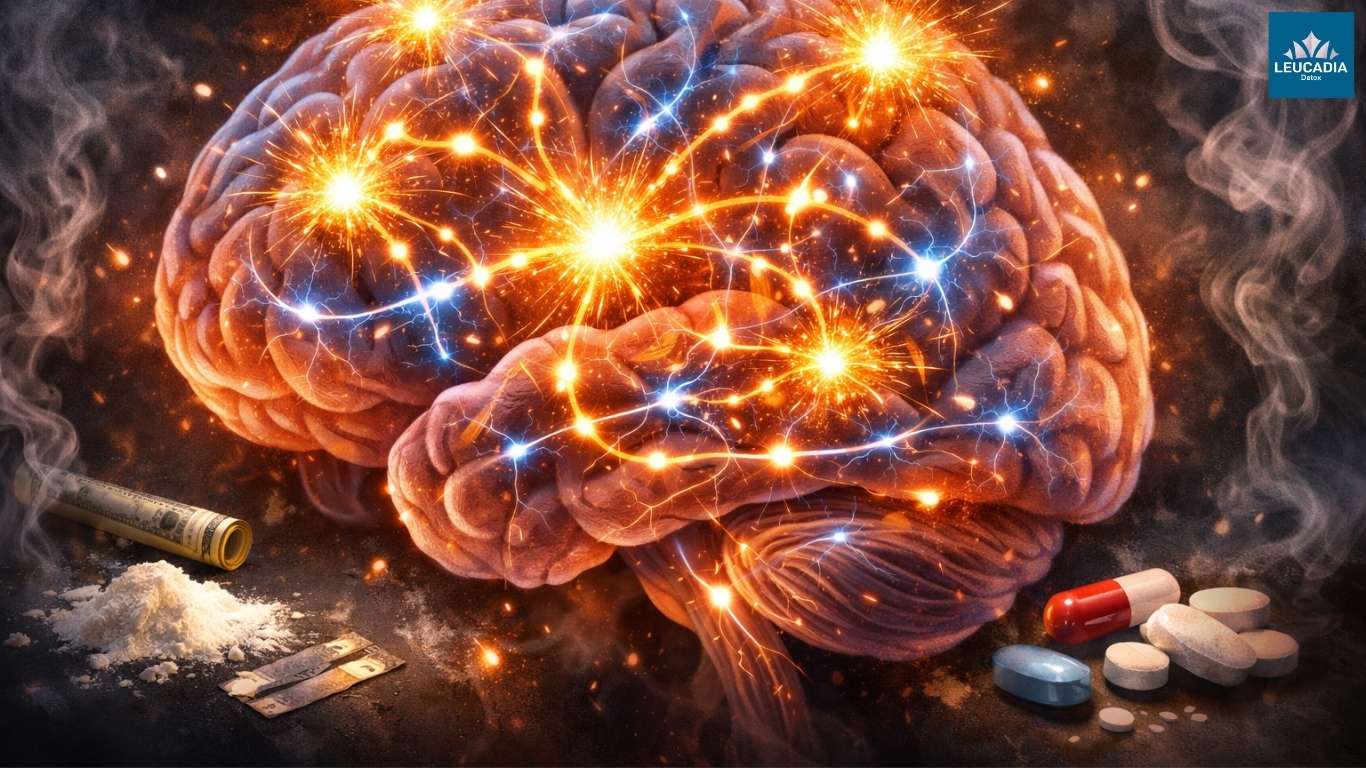
Drugs can interfere with the process of natural development.
What Happens When Drugs Enter the Brain
- Dopamine-releasing drugs cause a significant release
- The brain is flooded with immense pleasure or relief
- The brain connects the drug with reward
- As the cravings develop, they begin to manifest.
This dopamine-like surge in the brain is more powerful than the natural reward. As time passes, the brain begins placing the drug ahead of all other stimuli.
Why Certain Drugs Become Addictive So Quickly Compared to Others
Some drugs do not have the same effect on the brain in the same way. Certain drugs alter the brain’s chemistry more quickly.
Key Factors That Increase Addictiveness
Several factors explain why certain drugs become addictive quickly.
- Dopamine release speed
- The potency of the drug’s effects
- How quickly the drug gets to the brain
- How long will the effects last?
The stronger and more rapid dopamine response is, the greater the risk of addiction.
Why Speed Matters in Drug Addiction
Speed plays a vital role in addiction.
Fast-Acting Drugs and the Brain
The brain’s receptors for drugs quickly trigger immediate rewards. The brain is able to learn this connection very quickly.
Common quick ways are:
- Smoking
- Injecting
- Snorting
The brain is trained to want the drug immediately.
Why Slower Drugs Can Still Be Addictive
Some drugs take a longer time to take effect, but they still can cause dependence.
Slower Does Not Mean Safer
The drugs that are swallowed or consumed slowly can:
- Build dependence over time
- Change brain chemistry slowly
- Build psychological confidence
Prescription and alcohol-based drugs are often included in this category.
Examples of Drugs That Become Addictive Quickly
Certain substances are recognized for their high potential for addiction.
Quickly Addictive Drugs
- Fentanyl
- Heroin
- Methamphetamine
- Crack cocaine
These drugs cause intense dopamine spikes. The brain quickly adapts, which leads to dependence and tolerance.
Examples of Drugs That Become Addictive More Slowly
Other substances can take longer, but they still pose risks.
Slowly Addictive Drugs
- Alcohol
- Prescription opioids
- Benzodiazepines like Xanax
- Marijuana
Over time, these compounds continue to rewire the brain’s reward system.
How Tolerance Makes Addiction Worse
Tolerance is an essential component of addiction.
What Tolerance Means
Tolerance occurs when:
- The brain suppresses the dopamine response.
- The same dose is no longer efficient
- The higher doses are necessary
This increases the chance of overdose and intensifies the addiction.
How Withdrawal Reinforces Addiction
After stopping drug use, the brain has to find a new equilibrium.
Common Withdrawal Symptoms
- Anxiety
- Depression
- Insomnia
- Nausea
- The cravings are intense.
These signs can push people back to substance abuse. This makes addiction difficult to overcome without help.
Biological Factors That Increase Addiction Risk
Many people experience addiction in the same way.
Genetics and Brain Chemistry
Specific individuals are more prone because of:
- The history of the family of addicts
- Lower natural dopamine levels
- A higher sensitivity to reward
These biological causes help explain why addiction tends to develop faster for certain people.
Psychological Factors That Influence Addiction

Mental health plays a significant role.
Emotional Pain and Substance Use
Drugs can be used by people to manage:
- Anxiety
- Trauma
- Depression
- Chronic stress
They can temporarily dull emotions. In time, the brain relies on drugs as a way to cope.
Why Addiction Is Not About Willpower
Addiction can affect the process of making decisions, impulse control, and the regulation of emotions.
The brain adjusts to the repeated use of drugs:
- Cravings turn into automatic
- Self-control weakens
- Priorities shift
This is the reason why addiction is acknowledged as a medical issue and not a moral failing.
Why Education Is Critical in Addiction Recovery
Knowing addiction helps reduce the stigma and confusion.
When people are taught:
- Why do cravings occur
- The reason relapse risk exists
- The importance of medical support
Struggling with Addiction? We Can Help
Understand why addiction develops quickly & start your journey to recovery. Leucadia Detox offers guidance, support, and safe, expert care today.
The Connection Between Mental Health and Addiction
Mental health and substance use are tightly related.
Common Co-Occurring Conditions
A lot of people with an addiction may also suffer from:
- Anxiety disorders
- Depression
- Acute trauma-related symptoms
The treatment of mental health, as well as drug use, in conjunction can result in more positive outcomes.
Why Medically Supervised Detox Matters
Certain substances may cause unsafe withdrawal symptoms.
Drugs That Require Medical Detox
- Alcohol
- Benzodiazepines
- Opioids such as Fentanyl are among the most popular.
Medical supervision assists in managing the symptoms in a safe manner and aids in the stabilization of the brain. This is an essential first step towards recovery. This is highlighted through the Leucadia Detox as part of a caring, systematic approach.
Frequently Asked Questions About Drug Addiction
1. Is fentanyl addictive in comparison to other substances?
In the event of a question about how addictive the fentanyl drug is in comparison to other substances, fentanyl is regarded as one of the most addictive substances due to its high effectiveness and speedy effect on the brain’s reward systems.
2. How harmful is alcohol when compared to other substances?
If you’re wondering how harmful alcohol is when compared to other substances in the same way, alcohol is equally dangerous. It can cause physical dependence, extreme withdrawal, and permanent brain changes that are similar to those of many illicit drugs.
3. Why do certain drugs cause addictions more quickly than others?
Certain substances are addictive due to their powerful dopamine surges to the brain at a fast pace, which reinforces craving and reward patterns.
4. Do prescription drugs cause addiction?
Yes, prescription drugs like benzodiazepines and opioids can be addictive if they are misused. They affect the reward system of the brain, similar to street drugs.
5. Does the brain heal from addiction?
The brain’s ability to heal can be improved with time. If you provide the proper support, healthy routines, and medical treatment, dopamine balance, as well as the ability to make decisions, will gradually improve.
Final Thoughts on Why Addiction Develops So Quickly
Certain drugs are addictive because they alter the way that the brain perceives enjoyment, motivation, and relief. Strength, speed, and personal vulnerability all play a part. Understanding these aspects assists in resolving the issue with a clear mind.
If you’re learning for yourself or someone else, knowing is an effective tool. At Leucadia Detox, the understanding of addiction as a brain-based illness helps patients make the first steps to security and healing over the long term.
“Addiction is a fast-moving disease; however, understanding it provides clarity. Knowing will often be the initial step to recovery.”