Battling Depression And Addiction In California? Here’s How Specialized Treatment Helps
Objective
This blog explains how depression and substance use can affect each other, why treating both at the same time matters, and how specialized care in California can help. It also looks at depression and addiction treatment, the role of dual diagnosis, and how people may find support through drug treatment facilities in California, county behavioral health systems, and crisis resources.
Key Takeaways
- Depression and substance use often feed into each other.
- Treating only one problem can leave the other untreated.
- Dual diagnosis care treats mental health and addiction together.
- Good depression and addiction treatment usually includes therapy, medical support, and relapse planning.
- California has strong support options, including 988, county behavioral health services, and Drug Medi-Cal pathways.
- Getting help early can reduce risk and improve long-term recovery.
1. Understanding The Link Between Depression And Addiction
Depression and addiction often show up together. A person may feel deeply sad, tired, numb, or hopeless, then start using alcohol or drugs to feel different for a while. Another person may start with substance use, then slowly develop depression as life, health, work, or relationships begin to fall apart.
This is why the issue should not be treated like two separate boxes. The problems can overlap every day. Mood affects substance use. Substance use affects mood. That cycle can become hard to break without real support.
At Leucadia Detox, this matters because many people do not come in with only one struggle. They may say they need help with drinking or drug use, but underneath that, depression has also been taking over their daily life.
2. Why Depression Can Lead To Substance Use
People with depression often want relief. They may want to quiet racing thoughts, escape sadness, sleep better, or stop feeling empty for a few hours. Alcohol or drugs can seem like a quick answer.
But that relief usually does not last.
A person may start using substances to:
- Numb emotional pain
- Get through the day
- Sleep at night
- Feel less lonely
- Feel more energy for a short time
Over time, the brain can come to depend on that pattern. What began as coping can turn into regular misuse. This is one reason depression and addiction treatment needs to look at the full emotional picture, not just the substance itself.
3. Why Substance Use Can Make Depression Worse
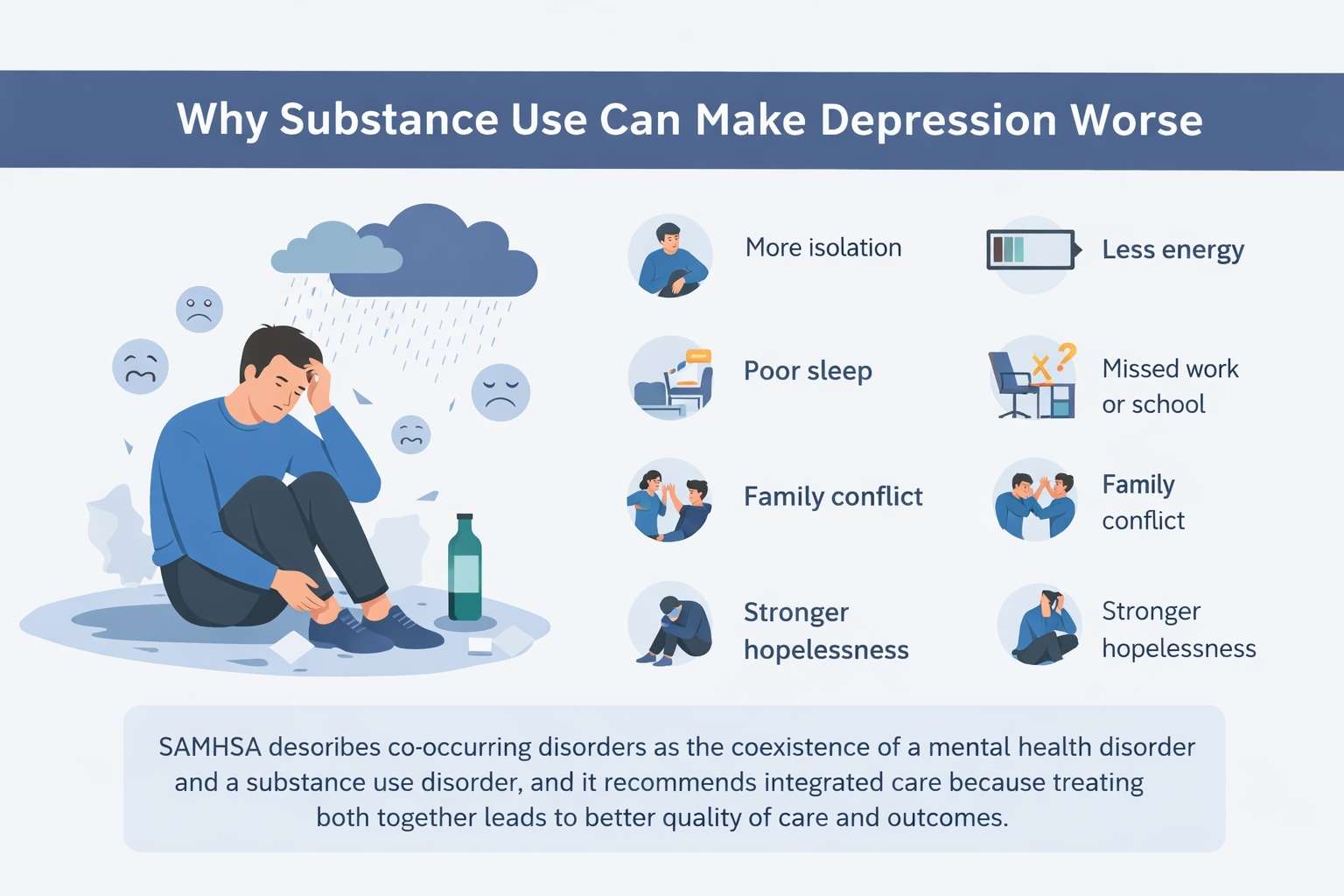
Substance use can make depression heavier in several ways. It can disrupt sleep, lower motivation, increase shame, create financial stress, damage relationships, and make daily routines harder to maintain.
Many people also notice that after the short effect wears off, they feel worse than before. That can lead to another round of use, then another emotional crash.
This pattern often includes:
- More isolation
- Less energy
- Poor sleep
- Missed work or school
- Family conflict
- Stronger hopelessness
SAMHSA describes co-occurring disorders as the coexistence of a mental health disorder and a substance use disorder, and it recommends integrated care because treating both together leads to better quality of care and outcomes.
4. What Dual Diagnosis Really Means
Dual diagnosis means a person is living with both a mental health condition and a substance use disorder at the same time. In this case, that may mean depression and addiction together. SAMHSA defines co-occurring disorders this way and notes that these conditions are common and treatable.
This matters because treatment works better when both problems are addressed together.
A dual diagnosis program may include:
- Mental health assessment
- Detox support when needed
- Individual therapy
- Group therapy
- Medication review
- Relapse prevention planning
- Ongoing aftercare support
Without this kind of structure, a person may get help for addiction but still leave with untreated depression. Or they may get depression care while substance use keeps disrupting progress.
5. Why Specialized Depression And Addiction Treatment Matters
Specialized care matters because depression and addiction do not usually improve through simple advice alone. People often need a treatment plan that matches their symptoms, history, and daily risks.
Strong depression and addiction treatment can help by:
- Identifying what came first and what keeps the cycle going
- Reducing withdrawal-related stress
- Building healthier coping tools
- Addressing low mood and relapse risk together
- Creating one clear treatment plan instead of two disconnected ones
That is the value of specialized care. It is not just more treatment. It is a more focused treatment.
In the middle of recovery, Leucadia Detox would naturally pay attention to both the emotional side and the substance use side, because real progress usually depends on both.
6. What To Expect In Drug Treatment Facilities In California
Many drug treatment facilities in California offer more than one level of care. A person may start in detox, move into residential treatment, then continue with outpatient support or therapy.
Depending on the program, care may include:
| Type Of Support | What It Helps With |
|---|---|
| Detox | Safe withdrawal and medical monitoring |
| Residential Care | Daily structure and deeper treatment |
| Outpatient Care | Continued therapy while living at home |
| Medication Support | Symptom management and stability |
The best programs for dual diagnosis do not treat depression like a side issue. They built it into the recovery plan from the start.
7. California Laws, Coverage, And Local Resources
California has several systems that can help people access behavioral health care. The California Department of Managed Health Care says the state’s Mental Health Parity Act, as amended in 2020, requires state-regulated commercial plans and insurers to provide full coverage for medically necessary treatment of all mental health and substance use disorders.
For Medi-Cal members, the California Department of Health Care Services oversees behavioral health policy areas, including Specialty Mental Health Services and Drug Medi-Cal programs.
California also has 988. The state says anyone can call or text 988, or chat online, for support during a suicidal, mental health, or substance use-related crisis. California’s 988 system routes callers to crisis centers and is part of the state’s broader crisis care system.
In simple terms, people in California may find help through:
- Private treatment programs
- Drug treatment facilities in California
- County behavioral health systems
- Drug Medi-Cal services
- 988 crisis support
8. Signs It Is Time To Seek Help
Some people wait too long because they think they should handle it on their own. But help is important when depression and substance use start changing daily life.
Warning signs include:
- Feeling low most days
- Using alcohol or drugs to cope
- Hiding use from others
- Losing interest in normal life
- Pulling away from family or friends
- Trouble at work, school, or home
- Feeling stuck, numb, or hopeless
When these signs keep building, depression and addiction treatment become less about preference and more about protection.
9. How Families Can Support Recovery
Families cannot fix everything, but they can make treatment more accessible. Calm support matters. So does clear honesty.
Helpful steps include:
- Encourage assessment early
- Avoid shaming language
- Learn what dual diagnosis means
- Support treatment attendance
- Watch for relapse warning signs
- Use crisis support when needed
Recovery often goes better when the person feels supported rather than judged.
Take Control Before Things Get Worse
Depression and substance use can feel overwhelming, but support is available. Speak with a caring team today and start building a safer, healthier future.
Conclusion
Depression and addiction can trap a person in a cycle that feels exhausting and hard to explain. The good news is that both can be treated. Dual diagnosis care gives people a better chance because it addresses both issues together, rather than pretending one will fix the other. In California, support may come through private programs, county systems, Drug Medi-Cal, and 988 crisis services. If you are looking at drug treatment facilities in California or trying to understand what kind of depression and addiction treatment makes sense, the most important step is to reach out before things get worse. Leucadia Detox reflects that simple truth: the right help can give recovery a real starting point.
FAQs
What Is Dual Diagnosis?
Dual diagnosis means a person has both a mental health disorder and a substance use disorder at the same time.
Why Do Depression And Addiction Often Happen Together?
Depression can lead people to self-medicate, while substance use can worsen mood, sleep, stress, and isolation. That is why they often reinforce each other.
Are There Drug Treatment Facilities In California That Handle Both Issues?
Yes. Many drug treatment facilities in California offer integrated care for substance use and mental health, including dual diagnosis treatment.
Does California Offer Public Behavioral Health Support?
Yes. California’s DHCS oversees Specialty Mental Health Services and Drug Medi-Cal behavioral health programs.
What Should Someone Do In A Crisis?
In California, a person can call or text 988 for support during a mental health, suicidal, or substance use-related crisis.