Why Quitting Xanax Suddenly Can Cause Severe Withdrawal Risks
Objective
This blog explains why Xanax can become hard to stop, what withdrawal can look like, and why quitting suddenly can be dangerous. It also explains why tapering is usually safer than stopping all at once, and how benzo detox and addiction treatment can help.
Key Takeaways
- Xanax can help with anxiety and panic, but it can also lead to physical dependence.
- Withdrawal symptoms from xanax can become serious if the drug is stopped too fast.
- A slow taper is usually safer than quitting cold turkey.
- Benzo detox may be needed for people with higher withdrawal risk.
- Addiction treatment can help with both withdrawal and long-term recovery.
What Xanax Is And Why People Use It
Xanax is a prescription medicine used for anxiety and panic symptoms. It belongs to a group of drugs called benzodiazepines. These medicines slow down activity in the brain and nervous system. That calming effect can help a person feel relief for a short time.
For some people, Xanax starts as a real medical need. They may be dealing with panic attacks, ongoing anxiety, or sudden fear that feels hard to control. The medicine may seem helpful at first because it works quickly. It can calm the body fast, and that can feel like a huge relief when someone is struggling.
At Leucadia Detox, families often learn that quick relief can also come with real risk. A medicine that works fast can also become hard to stop if it is used too often or for too long.
Why Dependence Can Develop
Dependence does not always begin with obvious misuse. Many people become dependent while taking Xanax in a way that first looked normal. They may start with a low dose. They may follow directions. They may believe they are using it safely.
The problem is that the body can adapt to the drug over time. When that happens, the same dose may not feel as strong as it did in the beginning. A person may feel like they need it more often. They may feel uneasy when a dose wears off. They may notice that sleep, calm, or focus feels worse without it.
This is how physical dependence can build. The brain starts adjusting to Xanax being present. Once that happens, stopping suddenly is not just uncomfortable. It can be unsafe.
Common signs that dependence may be developing include:
- Feeling anxious between doses
- Taking it more often than before
- Worrying about running out
- Feeling unable to sleep or relax without it
- Needing more to get the same effect
These signs do not always mean a person meant to misuse the drug. In many cases, they simply show that the body has gotten used to it.
Why A Sudden Stop Is Risky
Many people think the fastest way to quit is the strongest way to quit. That idea can be dangerous with Xanax. When a person has been taking it regularly, the nervous system may begin to rely on the drug’s calming effect. If the drug is removed too quickly, the brain can react in a very intense way.
That reaction is withdrawal.
A sudden stop can cause the body to swing from a slowed state into an overactive one. This can lead to fear, panic, shaking, sleep loss, and severe distress. In some cases, it can also lead to seizures or dangerous confusion.
This is why quitting Xanax suddenly is not the same as pushing through a few bad days. The risk is not only discomfort. The risk is that withdrawal can become a medical problem.
A person may be at higher risk if they:
- Have taken Xanax for a long time
- Use high doses
- Take it every day or most days
- Mix it with alcohol or other drugs
- Have a history of withdrawal problems
For people in those situations, trying to stop alone can be especially risky.
Withdrawal Symptoms From Xanax
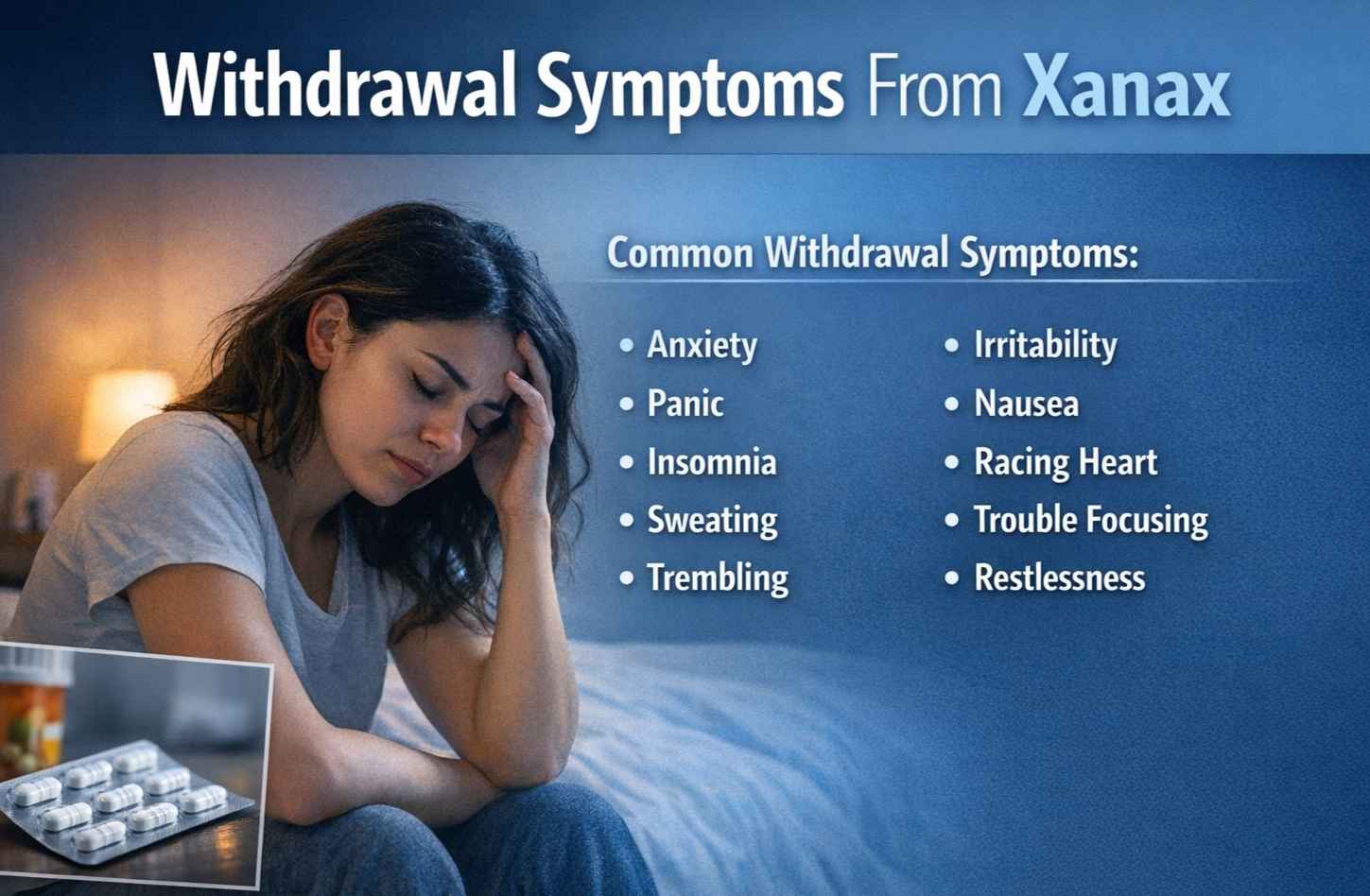
Withdrawal symptoms from xanax can range from mild to severe. Some people feel intense anxiety and restlessness. Others go through sleep problems, shaking, and panic. In more serious cases, the symptoms can become dangerous.
Common withdrawal symptoms from xanax include:
- Anxiety
- Panic
- Insomnia
- Sweating
- Trembling
- Irritability
- Nausea
- Racing heart
- Trouble focusing
- Restlessness
More severe symptoms can include:
- Confusion
- Hallucinations
- Severe agitation
- Seizures
- Delirium
The hard part is that symptoms do not always stay mild. A person may think they can handle it at first, then become much worse as time passes. That is one reason benzo detox can matter so much for safety.
Another issue is rebound anxiety. This means the anxiety comes back harder after the drug is stopped. That can make people feel desperate to take Xanax again just to get relief. This is one reason relapse often happens during withdrawal.
How To Stop Xanax Withdrawal More Safely
When people ask how to stop xanax withdrawal, the safest answer is usually not “stop today.” The safer answer is to taper under medical guidance.
Tapering means the dose is lowered slowly over time. This gives the brain and body time to adjust. Instead of forcing the nervous system into sudden shock, tapering makes the change more gradual. That does not make withdrawal easy, but it can make it safer and more manageable.
A taper plan is not the same for everyone. It depends on:
- How long the person used Xanax
- The daily dose
- Whether other substances are involved
- Past withdrawal history
This is why random advice online can be risky. Withdrawal needs a plan based on the person, not a guess.
Safer steps often include:
- Medical evaluation before reducing the dose
- Slow dose changes instead of big drops
- Monitoring symptoms closely
- Getting help if symptoms worsen
At Leucadia Detox, this kind of structured care matters because people often need more than willpower. They need a clear plan, close support, and a safer setting.
When Benzo Detox And Addiction Treatment Help
Not everyone will need the same level of care. Some people may taper with outpatient support. Others may need a higher level of help because their withdrawal risk is too great.
Benzo detox may be the safer choice for people who:
- Have tried and failed to stop before
- Have severe withdrawal symptoms
- Use high doses
- Have a seizure history
- Mix Xanax with alcohol or opioids
- Do not have a safe home environment
Detox is only the first step. Once the body is stabilized, addiction treatment helps with the deeper part of recovery. That may include therapy, relapse prevention, support for anxiety, family help, and planning for life after detox.
This matters because stopping Xanax is not only about getting through withdrawal. It is also about learning how to live without going back to the same pattern.
Take Control Before Xanax Withdrawal Gets Worse
Symptoms can escalate quickly without proper care. Start a safer path with expert-guided tapering, support, and recovery planning today.
Final Thoughts
Xanax may seem like a simple way to calm anxiety, but it can become difficult and risky to stop once dependence develops. That is why quitting suddenly can be dangerous. The body and brain may react fast, and withdrawal symptoms from xanax can become much more severe than people expect.
The safest way to approach this is with medical guidance, a careful taper, and support that matches the level of risk. Benzo detox and addiction treatment are not signs of weakness. They are practical ways to protect health, reduce danger, and make recovery more realistic.
Leucadia Detox supports people who need a safer path through withdrawal and a stronger start to recovery.
If stopping Xanax feels overwhelming or unsafe, professional care can help you taper safely and move toward recovery with real support.
FAQs
What Are The Most Common Withdrawal Symptoms From Xanax?
Common withdrawal symptoms from xanax include anxiety, panic, insomnia, sweating, shaking, nausea, irritability, and restlessness.
Why Is It Dangerous To Quit Xanax Suddenly?
It can shock the nervous system and lead to severe symptoms, including seizures, confusion, and extreme distress.
How To Stop Xanax Withdrawal More Safely?
The safer approach is usually a slow taper under medical guidance instead of a sudden stop.
When Is Benzo Detox Needed?
Benzo detox may be needed when a person has severe symptoms, high-dose use, past withdrawal problems, or an unsafe home setting.
What Does Addiction Treatment For Xanax Usually Include?
Addiction treatment may include detox support, therapy, relapse prevention, mental health care, and long-term recovery planning.