
Identifying Black Tar Heroin Use: A Guide for Families Seeking Treatment
This guide helps parents, spouses, and family members understand how to recognize possible black tar heroin use. It explains physical signs, behavior changes, and when to seek help. The goal is to give families the information they need to act early and protect someone they love.
1) What Black Tar Heroin Is
Black tar heroin is a form of heroin that looks dark and sticky, similar to roofing tar. It is usually produced in a less refined process than powdered heroin.
Because it is made this way, it often contains impurities. These impurities can cause different physical effects compared to other opioids.
Black tar heroin is commonly injected or smoked. Both methods can quickly create a strong dependence.
Families often learn about it only after serious problems appear. Programs familiar with early detection, such as Leucadia Detox, often see families wishing they had recognized warning signs sooner.
Did You Know?
Black tar heroin gets its name from its thick, dark appearance rather than its strength alone.
2) Why Families Often Miss Early Signs
Many people who use black tar heroin try hard to hide it. At first, changes may seem small or easy to explain.
Family members may think:
- “They are just stressed.”
- “They are tired from work.”
- “It’s a phase.”
People struggling with opioid use may still go to work or school early on. This makes warning signs harder to notice.
Secrecy often grows slowly. A person may withdraw emotionally before clear physical symptoms appear.
3) Physical Signs of Black Tar Heroin Use
Black tar heroin can cause specific physical changes because of how it affects the veins and the body.
Common physical signs
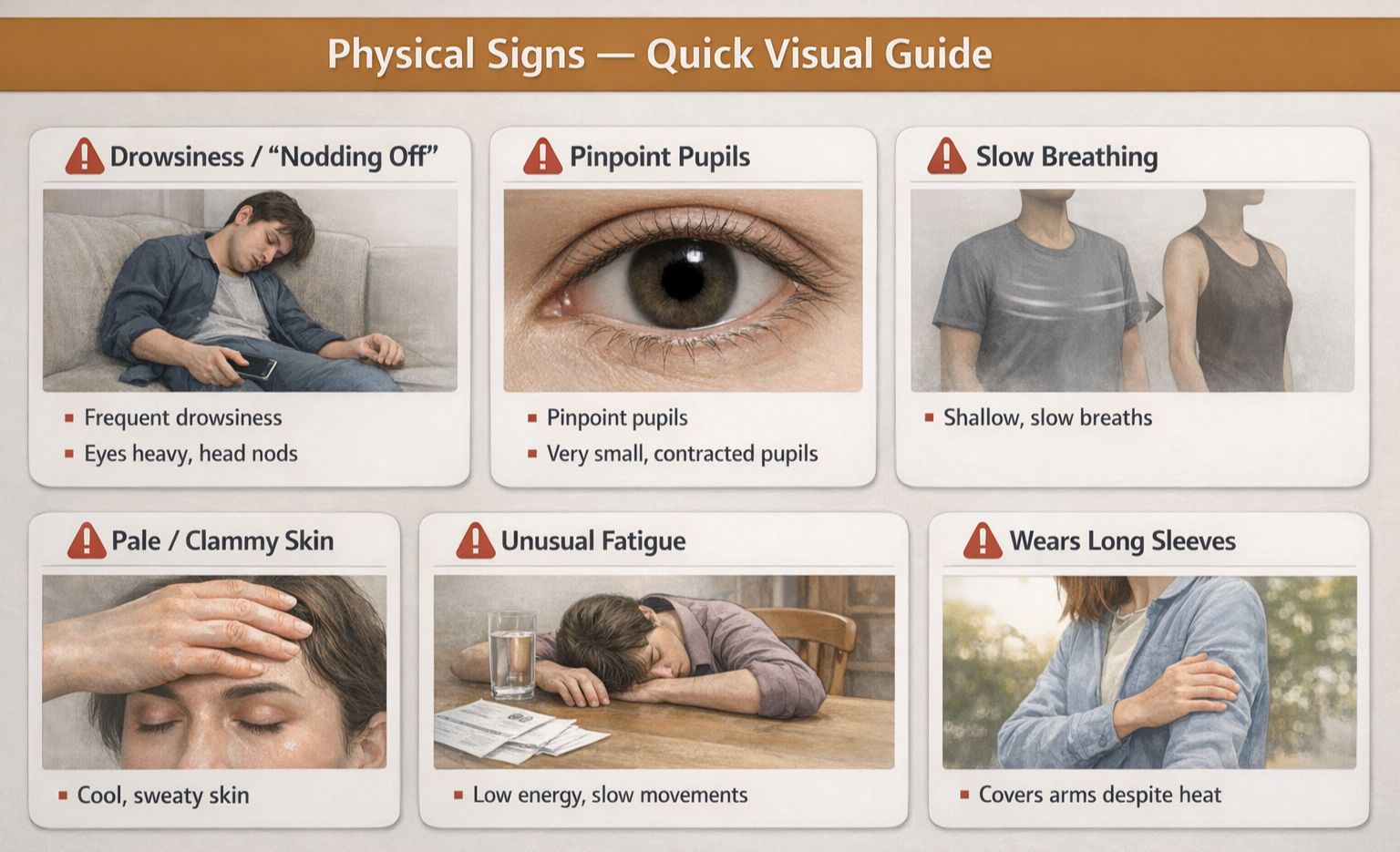
- Frequent drowsiness or “nodding off.”
- Pinpoint pupils (very small pupils)
- Slow breathing
- Sudden weight loss
- Pale or clammy skin
- Unusual fatigue
- Wearing long sleeves even in warm weather
Injection-related signs (more specific)
- Track marks on arms, hands, or legs
- Swelling or redness along the veins
- Skin infections or abscesses
- Hard or collapsed veins
Because black tar heroin is thick, it can damage veins faster than other forms.
Did You Know?
Vein damage from black tar heroin may push users to inject in hidden areas, making signs harder to see.
4) Behavioral and Emotional Changes
Behavior changes are often the first strong warning sign.
Emotional shifts families notice
- Mood swings
- Irritability
- Sudden calm followed by sadness
- Lack of motivation
- Emotional distance
Someone who was once open may become secretive or defensive.
Common behavior patterns
- Avoiding eye contact
- Leaving rooms to take calls
- Locking doors more often
- Becoming unusually private
- Losing interest in hobbies
These changes are not always intentional. Addiction changes brain reward systems and decision-making.
5) Lifestyle and Social Warning Signs
Lifestyle changes often appear alongside physical and emotional signs.
Possible lifestyle changes
- New friend groups that the family never met
- Financial problems or missing money
- Selling personal belongings
- Missing work or school
- Irregular sleep patterns
- Staying awake late or disappearing for hours
Families sometimes notice routines falling apart.
A person may also isolate from supportive relationships. Isolation allows substance use to continue without question.
6) How Black Tar Heroin Affects the Body Over Time
Black tar heroin is an opioid. It slows down the body. It also changes how the brain handles reward and stress. Over time, the body starts to “expect” the drug. That is what dependence looks like.
What families may notice early?
- The person seems unusually sleepy or “checked out.”
- They move more slowly and talk less
- They eat less or skip meals
- They get sick more often
- They stop taking care of basic things like hygiene
Short-term effects (what can happen soon after use)
- Heavy relaxation or feeling numb
- Slower breathing
- Slow thinking and poor focus
- Nausea or itching
- Constipation
These effects can come and go. That is why families sometimes feel confused. One day the person seems “fine,” and the next day they feel off.
Long-term effects (what can build over weeks or months)

- Strong cravings and loss of control
- Needing more to get the same effect
- Withdrawal symptoms when they stop
- Ongoing stomach problems and constipation
- Lower mood and less interest in life
- Higher risk of infections, especially with injection
Black tar heroin can also be rough on veins. It is thick and often has more impurities than other forms. That can lead to:
- Swollen areas near the veins
- Skin sores that do not heal well
- Abscesses (painful pockets of infection)
- Collapsed veins over time
You do not need to list every possible medical risk to take it seriously. If you are seeing a pattern of decline, that is enough reason to act.
7) Why Early Intervention Matters
Families often wait because they want proof. They hope it is stress, depression, or a rough patch. That is understandable.
But with opioids, time matters. Not because you should panic. Because small problems can become bigger problems if nothing changes.
Early intervention helps in real, practical ways.
- The person gets help before daily life falls apart
- Physical harm (like infections) is caught sooner
- Withdrawal can be managed safely instead of “white-knuckled.”
- Families stop guessing and start getting real answers
- The person has a better chance of staying connected to support
Early intervention does not mean forcing someone. It means taking a protective step as a family.
That step might look like:
- Setting a calm time to talk
- Asking direct but respectful questions
- Offering help with the next step (doctor visit, assessment, detox consult)
- Getting guidance yourself so you respond in a steady way
Many programs that support detox and stabilization, including Leucadia Detox, see families arrive after months of worry. Most say the same thing: “I wish we spoke up earlier.”
Did you know?
A calm, planned conversation works better than a surprise confrontation. People are more likely to listen when they do not feel trapped.
8) How Families Can Respond Safely
The way families respond matters.
Helpful approaches
- Stay calm and avoid accusations
- Use “I” statements (“I’m worried about you”)
- Choose a quiet time to talk
- Focus on safety, not blame
- Listen more than you speak
What to avoid
- Yelling or threats
- Public confrontations
- Searching belongings without discussion
- Trying to control every action
You cannot force recovery, but you can open the door to support.
If safety feels uncertain, professional guidance can help families plan next steps.
Worried About Someone You Love?
If you’re seeing warning signs and feel unsure what to do next, speak with a compassionate team that understands opioid use and family concerns.
Conclusion
Black tar heroin use can hide in plain sight. The signs often include physical changes, mood swings, and a life that gets messier over time. Families usually notice pieces of the puzzle first, not the whole picture.
If your gut keeps telling you something is off, trust that. You do not need perfect proof to start a careful conversation and get support. Acting early is not overreacting. It is protecting someone before the situation gets harder.
If you are unsure what to do next, a professional team that understands opioid use and detox, like Leucadia Detox, can help you figure out a safe and respectful plan.
FAQs
1. How is black tar heroin different from other heroin?
It has a dark, sticky form and often causes more vein damage due to impurities.
2. Can someone hide black tar heroin use for a long time?
Yes. Many people maintain daily routines while hiding early addiction signs.
3. What is the first sign families usually notice?
Behavior changes such as secrecy, mood swings, or withdrawal from family activities.
4. Should families confront someone immediately?
A calm, private conversation works better than confrontation or anger.
5. When should treatment be considered?
If physical, emotional, or lifestyle changes continue or worsen, professional help should be explored.