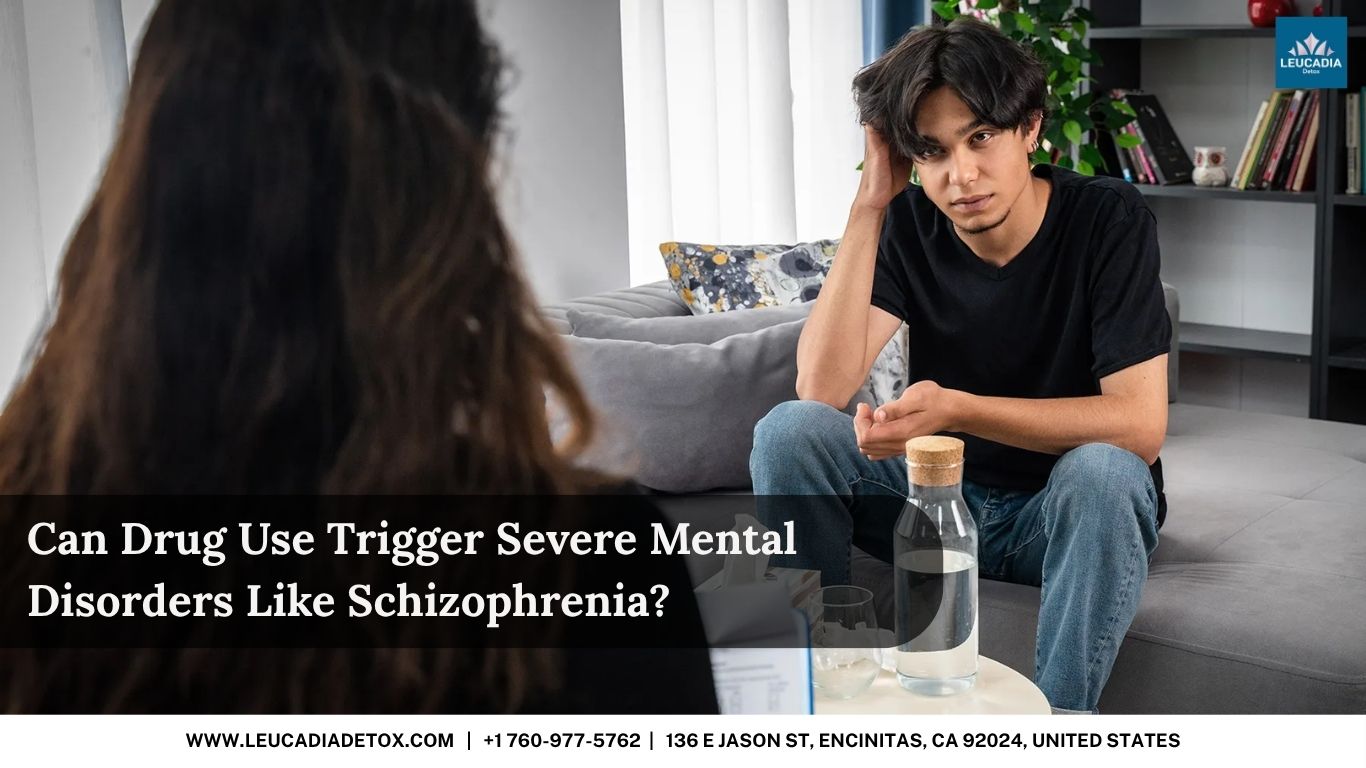
Can Drug Use Trigger Severe Mental Disorders Like Schizophrenia?
Objective
This blog explains the link between drug use and severe mental health disorders like schizophrenia. It explains whether substance use can trigger or worsen symptoms, what warning signs families should notice, and why early treatment matters.
Key Takeaways
- Drug use does not always directly cause schizophrenia.
- Some drugs can trigger psychosis or make hidden mental health risks worse.
- Schizophrenia can cause hallucinations, delusions, confused thinking, and major behavior changes.
- Heavy drug use, early exposure, family history, and stress can raise the risk.
- Substance use and mental health symptoms should be treated together.
- Professional support is important when symptoms affect safety, thinking, or daily life.
Table Of Contents
- Can Substance Abuse Cause Schizophrenia?
- What Are The Signs And Symptoms Of Schizophrenia?
- How Does Schizophrenia Affect The Brain?
- How Drug Use Can Trigger Or Worsen Symptoms
- Risk Factors Families Should Know
- When Drug Use And Mental Health Problems Happen Together
- Treatment And Support Options
- When To Get Help Right Away
- FAQs
Can Substance Abuse Cause Schizophrenia?
Many families ask one painful question: Can substance abuse cause schizophrenia? The answer is not simple. Drug use may not directly cause schizophrenia in every person. But it can trigger serious symptoms in people who are already at risk. It can also make existing mental health symptoms much worse.
Schizophrenia is a serious mental health condition. It can change how a person thinks, feels, speaks, and understands the world. A person may hear or see things others do not. They may believe things that are not true. They may speak in a way that is hard to follow. They may also pull away from family, school, work, or normal routines.
This can be very scary for the person and the family. When drug use is also involved, the situation can feel even more confusing. Leucadia Detox understands that families often need clear answers during moments like this. The first step is to understand what may be happening and why professional help matters.
What Are The Signs And Symptoms Of Schizophrenia?
People often search for the signs and symptoms of schizophrenia when a loved one starts acting in a way that feels unusual or unsafe. The signs may appear slowly. In some cases, they may seem to happen suddenly, especially after drug use, heavy stress, or lack of sleep.
Common symptoms may include:
- Hearing voices that others do not hear
- Seeing things that are not there
- Strong false beliefs
- Feeling watched, followed, or controlled
- Confused speech
- Trouble keeping thoughts in order
- Strange or risky behavior
- Pulling away from family and friends
- Poor hygiene or self-care
- Low motivation
- Trouble showing emotion
- Fear, suspicion, or extreme worry
- Trouble working, studying, or handling daily tasks
Hallucinations and delusions are two major symptoms. A hallucination means seeing, hearing, or feeling something that others do not. A delusion means strongly believing something that is not based in reality.
For example, a person may believe strangers are spying on them. They may think the television is sending them messages. They may hear voices saying harmful or frightening things.
These symptoms are not “just drama.” They are not lazy. They are not something a person can simply snap out of. They need proper care.
How Does Schizophrenia Affect The Brain?
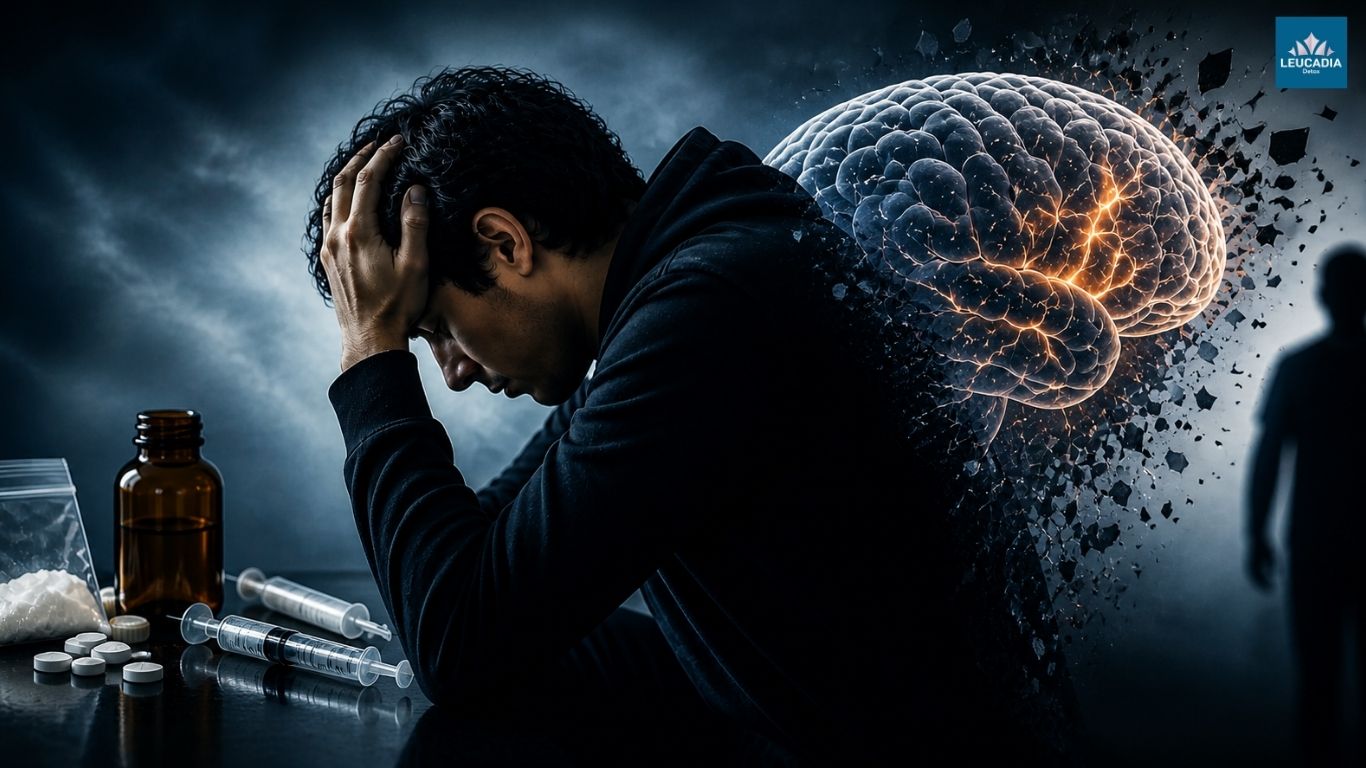
To understand how schizophrenia affects the brain, think of the brain as a communication system. The brain sends messages all day. These messages affect thoughts, emotions, memory, sleep, movement, and decisions.
Schizophrenia can disturb how the brain handles these messages. This can make it harder for the person to tell what is real and what is not. It can also affect focus, speech, emotions, and behavior.
A person may:
- Struggle to organize thoughts
- Find it hard to follow a conversation
- Feel strong fear without a clear reason
- Misread normal events as threats
- React to things others cannot see or hear
- Lose interest in everyday life
- Feel disconnected from people
Drug use can also affect the brain. Some drugs change mood, sleep, judgment, and perception. Some drugs can increase fear or paranoia. Others can disturb brain chemicals linked with reward, stress, and reality testing.
When a person already has a mental health risk, drugs can place extra pressure on the brain. This can lead to symptoms that look like schizophrenia or make schizophrenia symptoms worse.
How Drug Use Can Trigger Or Worsen Symptoms
Drug use can affect people in different ways. One person may use a substance and seem fine for a while. Another person may have a strong mental health reaction. This is why it is hard to predict who will be affected.
Some drugs can cause temporary psychosis. Psychosis means a person loses touch with reality. They may hear voices, feel paranoid, or believe things that are not true.
In some people, these symptoms fade after the drug leaves the body. In others, symptoms may continue. This may reveal a deeper mental health condition that was already developing.
Drugs that may be linked with psychosis symptoms include:
- Cannabis, especially heavy or high-strength use
- Stimulants
- Hallucinogens
- Heavy alcohol use
- Alcohol withdrawal
- Misused prescription drugs
- Mixed substance use
This does not mean every person who uses these substances will develop schizophrenia. But the risk can be higher for people who are already vulnerable.
Drug use can also make treatment harder. A person may stop taking medication. They may miss appointments. They may sleep poorly. They may become more paranoid, anxious, or confused.
This is why substance use and mental health symptoms should be addressed together.
Risk Factors Families Should Know
Not every person has the same risk. Some people are more likely to develop serious mental health symptoms after drug use.
Risk factors may include:
- Family history of schizophrenia or psychosis
- Drug use during teenage years
- Heavy or frequent drug use
- Using high-strength substances
- Mixing several substances
- Trauma or long-term stress
- Lack of sleep
- Existing anxiety or depression
- Past signs of paranoia or hallucinations
- Poor support at home
- Stopping mental health medication
Early exposure is important. The teen brain is still developing. Drug use during this time may affect thinking, mood, and stress response. This does not mean every teen who uses drugs will develop schizophrenia. But it can increase risk, especially when family history is present.
Genetics also matter. If schizophrenia or psychosis runs in the family, drug use may increase the chance of symptoms appearing earlier or becoming worse.
When Drug Use And Mental Health Problems Happen Together
Sometimes a person has both substance use problems and mental health symptoms. This is often called a dual diagnosis.
This can create a difficult cycle.
A person may use drugs to escape fear, sadness, voices, or stress. For a short time, they may feel relief. But later, the drug use may make symptoms worse. The person may become more anxious, more paranoid, or more confused.
Then they may use it again to cope. The cycle continues.
A dual diagnosis may involve:
- Drug use and schizophrenia
- Drug use and depression
- Drug use and anxiety
- Drug use and trauma
- Drug use and bipolar symptoms
- Drug use and psychosis
This is why treatment should not focus only on stopping drug use. It should also look at what is happening in the mind. If psychosis, paranoia, or hallucinations are present, the person may need medical and psychiatric care.
Leucadia Detox can be part of the first step when substance use is making mental health symptoms harder to manage. Detox alone may not solve everything, but it can help create a safer starting point for deeper care.
Treatment And Support Options
Treatment should be based on the person’s symptoms, safety, medical needs, and substance use history. A full assessment is important.
Support may include:
- Medical detox
- Mental health evaluation
- Medication when needed
- Therapy
- Dual diagnosis treatment
- Family education
- Relapse prevention planning
- Crisis support
- Long-term outpatient care
- Residential treatment when symptoms are severe
Medical detox can help when withdrawal may be unsafe or difficult. But if schizophrenia-like symptoms are present, detox should connect to mental health support.
Therapy can help the person understand triggers, build coping skills, and manage stress. Family therapy can also help loved ones learn what to do and what to avoid.
Families may search for substance abuse treatment near me when the situation begins to feel unmanageable. Others may look for substance abuse treatment in California when they need care in a specific area.
A professional substance abuse treatment program in California can help when substance use and mental health symptoms need to be treated together.
When To Get Help Right Away
Some signs should never be ignored. They may point to a serious mental health or safety risk.
Get urgent help if a person:
- Hears voices telling them to hurt themselves or others
- Believes people are trying to harm them
- Acts very paranoid or confused
- Has not slept for several days
- Becomes aggressive or unsafe
- Cannot care for basic needs
- Uses drugs and then becomes detached from reality
- Talks about death or self-harm
- Shows severe withdrawal symptoms
- Wanders away or acts dangerously
In these moments, do not wait for things to improve on their own. Call emergency services or go to the nearest emergency room.
It is better to act early than to wait until the situation becomes more dangerous.
How Families Can Respond With Care
When someone is using drugs and also showing signs of paranoia, hallucinations, or confused thinking, the family may feel scared and unsure. That is normal. The goal is not to win an argument. The goal is to keep the person safe and help them get proper care.
Speak in a calm voice. Use short sentences. Do not crowd the person or speak over them. If they believe something that is not real, do not mock them or force them to agree with you. That can make fear worse.
Try saying something like, “I can see this feels very real and frightening to you. I am here with you. Let’s get help so you feel safe.”
Families can also help by:
- Staying calm during the conversation
- Moving sharp objects, drugs, or alcohol out of reach if it is safe to do so
- Avoiding blame, shame, or threats
- Keeping the room quiet and less crowded
- Writing down symptoms, drug use details, and behavior changes
- Calling a doctor, crisis line, or emergency service if safety is at risk
- Getting support for themselves, too
If the person talks about harming themselves or someone else, acts violently, cannot recognize reality, or seems medically unwell, do not wait. Call emergency help right away.
Get Help for Substance Abuse and Mental Health Today
If drug use is causing confusion, paranoia, or signs of psychosis, don’t wait. Professional detox and dual diagnosis care can help stabilize symptoms and protect long-term mental health.
Final Thoughts
Drug use and serious mental health symptoms can be a frightening mix. It may not always be clear what caused what, but the warning signs should never be ignored.
If someone is hearing voices, feeling paranoid, acting confused, or losing touch with reality after using drugs, they need support. Waiting can make the situation harder and more dangerous.
With the right care, both substance use and mental health symptoms can be treated together. Leucadia Detox can help people take the first step toward safety, stability, and proper support.
If drug use is changing how someone thinks, feels, or acts, do not wait for things to get worse. Reach out through Substance Abuse Treatment California or speak with a professional treatment center today.
FAQs
1. Can Substance Abuse Cause Schizophrenia?
Drug use does not cause schizophrenia in every person. But it can trigger psychosis or bring out serious symptoms in someone who already has a higher risk. It can also make an existing mental health condition worse.
2. What Are The Signs And Symptoms Of Schizophrenia?
Common signs include hearing voices, seeing things others do not see, strong false beliefs, confused speech, unusual behavior, social withdrawal, poor self-care, and trouble thinking clearly.
3. Can Drug Use Make Schizophrenia Symptoms Worse?
Yes. Drugs can increase paranoia, fear, confusion, sleep problems, and risky behavior. They can also make it harder for the person to follow treatment or stay stable.
4. How Does Schizophrenia Affect The Brain?
Schizophrenia can affect how the brain handles thoughts, emotions, memory, and reality. This may make it hard for the person to tell what is real, stay focused, or respond calmly to daily life.
5. What Should Families Do If Symptoms Start After Drug Use?
Stay calm and focus on safety. Do not argue about what is real. Keep the person away from more substances and contact a medical or mental health professional as soon as possible.
6. When Should Someone Get Emergency Help?
Get emergency help if the person is hearing voices telling them to harm themselves or others, acting in an unsafe manner, very confused, extremely paranoid, unable to care for basic needs, or having severe withdrawal symptoms.