How to Choose the Best Benzodiazepine Detox Center in California
Objective
Give families a practical way to evaluate a benzodiazepine detox center in California, so the decision comes down to medical safety and treatment quality, not homepage copy.
Key Takeaways
- Medical supervision matters more for benzodiazepine detox than for most substances, since withdrawal can trigger seizures
- Accreditation, licensed staff on-site 24/7, and a personalized taper schedule separate a real detox facility California families can trust from one that just looks the part
- Aftercare should be part of the conversation before detox even starts, not an afterthought at discharge
- Insurance coverage and location matter, but they shouldn’t outrank whether the facility can actually manage a benzo taper safely
- Detox stabilizes the body. What happens after determines whether recovery actually holds
Table of Contents
- What Makes a Quality Benzodiazepine Detox Center
- Why Medical Supervision Isn’t Optional
- Key Factors to Check Before Choosing a Center
- What the Admissions Process Looks Like
- Personalized Treatment Plans and Patient Safety
- What Happens After Detox
- What It Costs
- FAQ
Your brother’s been on Klonopin for three years, prescribed after a divorce left him unable to sleep. He wants it off now. You’ve started searching for a benzodiazepine detox center in California, and every site you find says the same three things: compassionate care, personalized treatment, proven results.
None of that tells you what you actually need to know. Can this specific facility manage a seizure if one happens at 3 a.m.? Does their medical staff actually understand benzo tapers, or do they run every client through the same generic detox schedule?
That distinction matters more here than with most substances, because benzodiazepine withdrawal carries real seizure risk. This is the checklist we’d hand a family member: what separates a facility built for this from one that just has good marketing. If you’re weighing this decision right now, our admissions team can talk through your specific situation before you commit to anything.
What Makes a Quality Benzodiazepine Detox Center
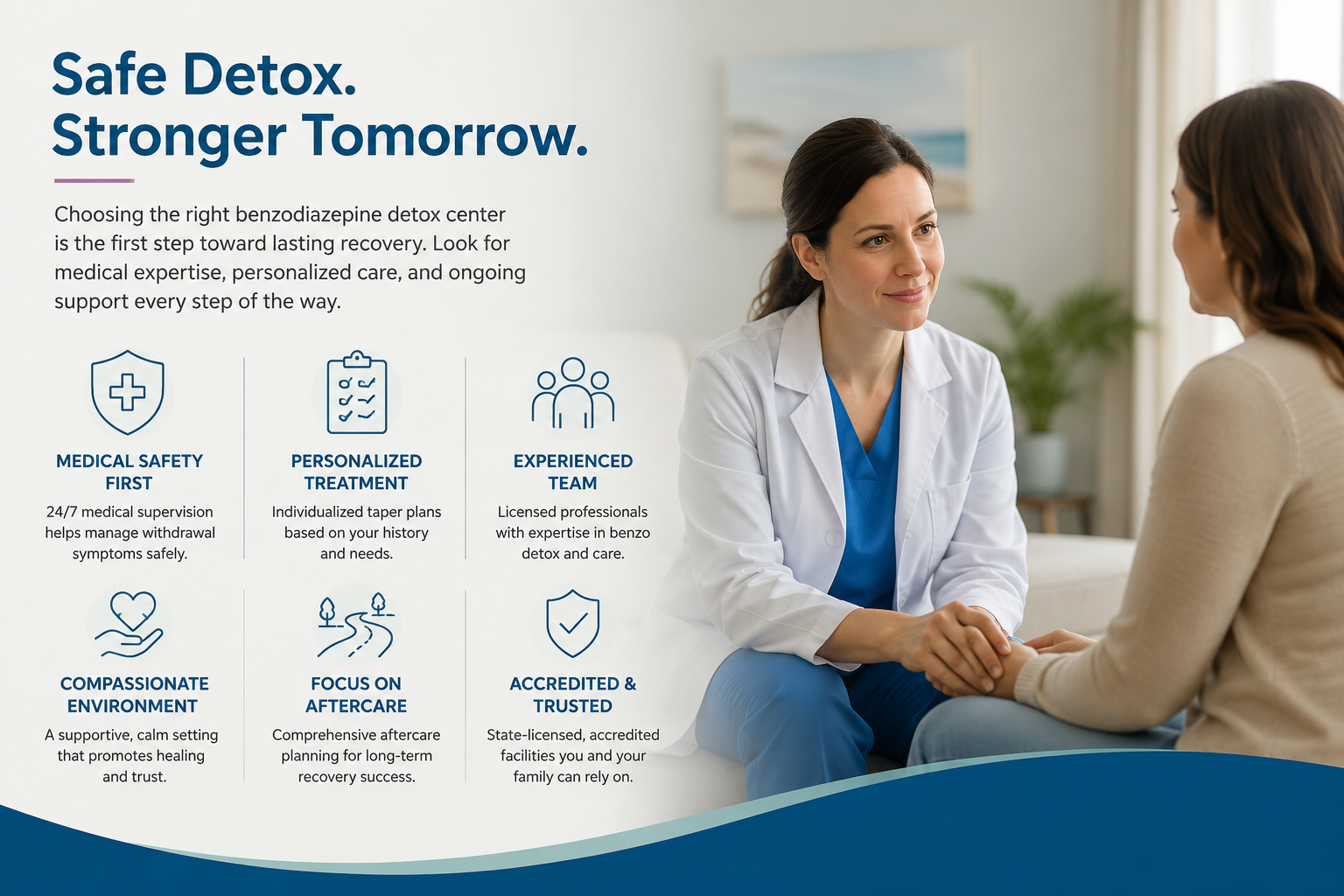
One thing isn’t negotiable: licensed medical staff on-site around the clock, not on-call from somewhere else. Withdrawal complications move fast, and a facility needs people physically present who can respond immediately.
A good benzo treatment center also builds its taper protocol around the individual. Medication, dosage, length of use, and any other substances involved all change the plan. A facility that runs everyone through the same fixed timeline isn’t practicing real medicine.
Setting matters too, just less than people assume. A calm, structured environment helps recovery along. It doesn’t replace clinical competence. Comfort without medical rigor isn’t safety, it’s just a nicer waiting room.
Why Medical Supervision Isn’t Optional
Benzodiazepines suppress the central nervous system. Stop them too fast, and the nervous system rebounds hard enough to cause seizures in some cases.
That’s not a rare edge case. It’s a documented risk in clinical literature on benzodiazepine withdrawal, and it’s the main reason self-directed tapers at home carry real danger, especially after long-term or high-dose use.
Common withdrawal symptoms families should recognize:
- Rebound anxiety and insomnia in the first 24 to 72 hours
- Tremors, sweating, and nausea during the first one to two weeks
- Seizures or hallucinations in more severe cases
- Lingering anxiety or cognitive fog that can persist for weeks afterward
A medically supervised setting adjusts the taper in real time based on how someone’s actually responding. That flexibility is what separates supervised detox from a printed-out schedule at home.
Key Factors to Check Before Choosing a Center
Here’s what actually separates a capable detox facility California residents can rely on from one that just looks the part.
Accreditation and Licensing
Confirm the facility is licensed by the state and, ideally, accredited by an independent body. This isn’t paperwork for its own sake. It reflects whether the facility meets consistent clinical standards, not just local ones.
Medical Staff Qualifications
Ask directly who’s on-site during detox, physicians, nurses, and their overnight availability. A facility that gets vague about this question is worth walking away from.
Treatment Approach
Some centers only manage the physical taper. Others integrate therapy from day one, addressing the anxiety or trauma that often sits underneath benzodiazepine dependence. The second approach holds up better over time.
Aftercare Planning
A facility should be discussing what comes after detox before detox even ends. If aftercare only gets mentioned at discharge, that’s a planning gap, not a minor detail.
Location and Near-Me Searches
Searching for a benzo detox center near me makes sense; staying close to home supports family involvement during and after treatment. It shouldn’t be the deciding factor if the nearest option isn’t equipped for benzo-specific detox.
Insurance and Cost Transparency
A facility should verify your coverage clearly before you commit to anything, and tell you what you’re likely to owe out of pocket.
What the Admissions Process Looks Like
Families often assume admissions takes days. At a facility built for this, it usually doesn’t:
- Initial call. A brief conversation about substance history, current dosage, and any co-occurring conditions.
- Insurance verification. Coverage gets checked before anything else moves forward, so cost isn’t a surprise later.
- Clinical assessment. A physician or nurse reviews the case in more depth to build a specific taper plan.
- Admission. Many facilities, including ours, offer same-day admission once the assessment confirms the right level of care.
- Detox begins. Continuous monitoring starts immediately, not on a scheduled check-in basis.
Personalized Treatment Plans and Patient Safety
No two benzodiazepine dependencies look the same. Someone on a low, stable dose of Ativan for six months is a different clinical picture than someone who’s been combining Xanax with alcohol for years.
A facility worth choosing builds the taper around that individual history: which benzo, what dose, how long, and what else is going on medically or psychologically. Generic protocols miss the details that actually determine risk.
Safety monitoring should be continuous, not scheduled every few hours. Vital signs, symptom severity, and mental status all need regular tracking, especially during the first week when risk peaks.
What Happens After Detox
Detox stabilizes the body. It doesn’t touch the reason someone started relying on benzodiazepines in the first place, whether that’s untreated anxiety, insomnia, or unresolved trauma.
Ongoing treatment after detox typically includes individual therapy, sometimes group sessions, and a relapse prevention plan built around personal triggers. Skipping this step is one of the more common reasons people relapse within the first few months.
Families researching a benzo addiction treatment center california families can rely on should ask directly how detox connects to what comes next. If a facility can’t describe that transition clearly, that’s worth a second look before committing.
At Leucadia Detox in Encinitas, part of Maven Recovery Centers, that transition includes trauma-informed counseling, family-focused healing, and practical skills like sleep and stress management. Our sister location, Pacific View Detox in Dana Point, extends that same continuity of care across Orange County.
What It Costs
Cost is one of the biggest reasons people delay getting supervised help, and it deserves a direct answer instead of vague reassurance. Medically supervised detox is typically priced by length of stay, and most major insurance plans cover it as a substance use disorder benefit under the Affordable Care Act.
Coverage details still vary by plan, deductible, and network status. A direct insurance verification call is the fastest way to get a real number, and our admissions team typically completes it within 24 hours at no cost.
Choose a Trusted Benzodiazepine Detox Center in California
Finding the right benzodiazepine detox center can make all the difference in your recovery journey. At Leucadia Detox, we provide 24/7 medically supervised detox, personalized taper plans, and compassionate support to help you withdraw safely and transition into lasting recovery with confidence.
FAQ
How do I know if a detox center is actually equipped for benzodiazepine withdrawal specifically?
Ask about their taper protocols and whether medical staff are on-site 24/7, not on-call. A facility that treats benzo detox the same as any other substance detox is a red flag.
What’s the difference between detox and full addiction treatment?
Detox manages the physical withdrawal. Full treatment addresses the underlying causes through therapy and builds a relapse prevention plan. Detox alone rarely holds without that second phase.
Does insurance typically cover benzodiazepine detox in California?
Most major insurance plans cover medically supervised detox as a substance use disorder benefit. Coverage specifics depend on your plan, so verification before admission gives you a clear number instead of a guess.
How long does benzodiazepine detox usually take?
Acute withdrawal typically runs one to two weeks, though the full taper can extend longer depending on dosage history and which benzodiazepine was used. Long-term or high-dose cases often need a slower, extended taper.
What withdrawal symptoms should I expect during the first few days?
Rebound anxiety, insomnia, and irritability usually show up first. Tremors and nausea tend to peak around days three through fourteen, which is why medical monitoring matters most during that window.
What if my family member has tried detox before and it didn’t work?
A previous failed attempt often means the taper was too fast, unsupervised, or wasn’t followed by real aftercare. Tell any new facility about that history so they can adjust the approach accordingly.
Is there a benzodiazepine detox center near me in North County San Diego?
Leucadia Detox is based in Encinitas, part of North County San Diego, with sister facilities extending coverage across Orange County and the greater Los Angeles area.
Will my family be included in the treatment process?
Yes. Family education and communication are part of a well-run program, since recovery tends to hold up better when the people at home understand what’s happening and how to support it.
Is the initial assessment confidential?
Yes. Initial calls and clinical assessments are confidential, and reaching out doesn’t commit you to anything until you decide to move forward.
How quickly can someone be admitted once they decide to get help?
Many facilities, including ours, offer same-day admission once an assessment confirms the right level of care, so the gap between deciding and starting doesn’t stretch on for weeks.
Getting the Right Care Started
Choosing a benzodiazepine detox center in California comes down to medical capability first, everything else second. Comfort and location matter, but they don’t replace 24/7 clinical supervision and a taper plan built around the individual in front of them.
Leucadia Detox, part of Maven Recovery Centers in Encinitas, provides medically supervised benzodiazepine detox with continuous monitoring, followed by a treatment plan built around what actually caused the dependence. We work with clients across North County San Diego, Orange County, and the greater Los Angeles area.
Call 888-574-8028 for a confidential conversation, or reach out through our admissions page to get started.