Understanding Meth Addiction: Treatment Options in Encinitas
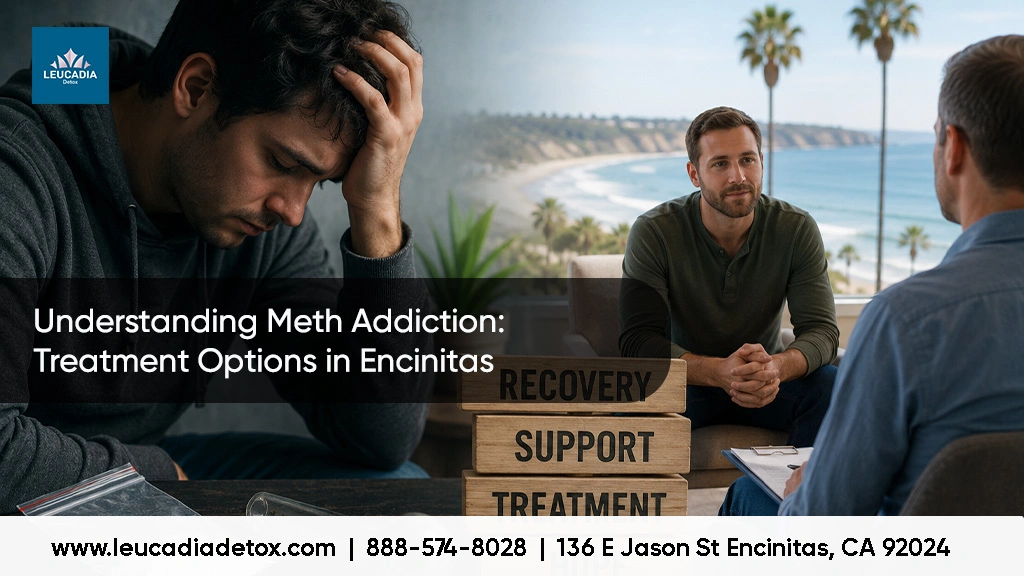
Understanding Meth Addiction: Treatment Options in Encinitas
Methamphetamine is a strong and highly addictive stimulant. It can affect your sleep and daily life. Stopping meth can also cause fatigue and strong cravings.
A CDC report released in January 2026 found 28,722 U.S. overdose deaths involving psychostimulants in 2024. This was down from 34,855 deaths in 2023. The age-adjusted death rate fell by 19.8%. Methamphetamine is a major drug in this group. (CDC)
Meth Addiction Treatment Encinitas may include an assessment and ongoing support. Your care should match your drug use, health, withdrawal symptoms, and other needs.
Signs of Meth Addiction
Meth use can become hard to control. You may keep using it even when it causes problems in your life.
Some common signs are:
- Strong cravings for meth
- Using more than you planned
- Trying to stop but using again
- Staying awake for long periods
- Sleeping for long periods after use
- Changes in weight or appetite
- Anxiety or irritability
- Paranoia or unusual thoughts
- Problems at work or home
- Money or relationship problems
Withdrawal can start after you stop or cut down. Fatigue and cravings are common. Some people may also have severe depression or psychosis. Medical support can help when these symptoms are severe.
Meth Addiction Treatment Encinitas: Main Treatment Options
There is no single treatment plan for meth use disorder. A clinician will first assess your needs. This may include your drug use, physical health, mental health, and use of other drugs.
| Treatment | What it may include | Goal |
|---|---|---|
| Assessment | Medical and mental health checks | Plan safe care |
| Detox care | Monitoring and support | Manage early withdrawal |
| Behavioral therapy | CBT and other therapies | Manage cravings and triggers |
| Contingency management | Rewards for treatment goals | Support reduced or stopped use |
| Ongoing care | Therapy and recovery support | Help prevent a return to use |
The ASAM and AAAP guideline lists contingency management as the current standard of care for stimulant use disorder. CBT and other behavioral treatments may also be used.
CBT can help you spot thoughts, habits, and situations that can lead to meth use. You can then learn ways to manage cravings and avoid high-risk situations.
What Happens During Meth Withdrawal?
Meth withdrawal is not the same as alcohol or opioid withdrawal. It does not usually need a medicine to prevent dangerous physical withdrawal. Still, medical care can be useful. Withdrawal may affect your mood and mental health.
Common symptoms include:
- Extreme tiredness
- Sleeping more than usual
- Low mood
- Anxiety
- Irritability
- Increased appetite
- Strong cravings
- Trouble focusing
Some symptoms can last for weeks or months. These may include depression, anxiety, sleep problems, or paranoia.
This is why detox is only one part of treatment. After detox, therapy and recovery support can help you deal with cravings and the causes of ongoing drug use.
Are There Medicines for Meth Addiction?
There is currently no FDA-approved medicine made specifically to treat methamphetamine use disorder. Research is still underway. One clinical trial found that injectable naltrexone combined with oral bupropion reduced meth use and cravings in some participants. This combination is not FDA-approved specifically for methamphetamine use disorder.
A doctor should decide if any medicine is suitable for you. Your other health conditions and medicines also matter. Behavioral care remains a key part of treatment. Contingency management has strong evidence for stimulant use disorder.
Choosing a Treatment Program in Encinitas
Before choosing a program, ask clear questions about its care. You can ask:
- Who provides medical care during detox?
- How often will your health be checked?
- What therapy is available after detox?
- How does the program handle mental health symptoms?
- Can it treat other substance use at the same time?
- What care is available after you leave?
- Is the facility licensed for the services it provides?
Leucadia Detox states that its Encinitas facility offers medically supervised detox and treatment for methamphetamine use. Its website lists the facility at 136 E Jason St, Encinitas, California. It also lists California DHCS license number 370238AP, with an expiration date of December 31, 2026.
These are claims published by the facility. You should still confirm current licensing and services before choosing care.
When Meth Use Becomes an Emergency
Meth can cause serious medical problems. These can include high blood pressure and heart problems. Call 911 or seek emergency care for symptoms such as:
- Chest pain
- Trouble breathing
- Seizures
- Severe overheating
- Loss of consciousness
- Severe confusion
- Dangerous or violent behavior
The illegal drug supply also creates an overdose risk. CDC data show that opioids were involved in 68.8% of methamphetamine-involved overdose deaths from January 2021 through June 2024.
Final Thoughts
Meth addiction can affect your health and daily life. Treatment can address withdrawal, cravings, drug use, and mental health needs.
For people considering Meth Addiction Treatment Encinitas, a clinical assessment is a good place to start. Leucadia Detox reports offering medically supervised detox and methamphetamine treatment in Encinitas. Before choosing a program, check its services, clinical care, license status, and plans for continued treatment.
FAQs About Meth Addiction Treatment
Can meth addiction be treated?
Yes. Treatment can help reduce meth use and support recovery. Behavioral treatments have the strongest support. Contingency management and CBT are commonly used.
How long does meth withdrawal last?
The early phase often brings tiredness, sleep changes, low mood, irritability, and cravings. Some symptoms can continue for weeks or months. The length and severity vary from person to person.
Do you need detox for meth addiction?
Not everyone needs residential detox. Your health and use of other substances all matter. A medical assessment can help decide what level of care is suitable.
What is the most effective treatment for meth use disorder?
There is no single treatment that works for everyone. ASAM and AAAP recommend contingency management as the standard of care for stimulant use disorder. CBT and other behavioral treatments may also help.